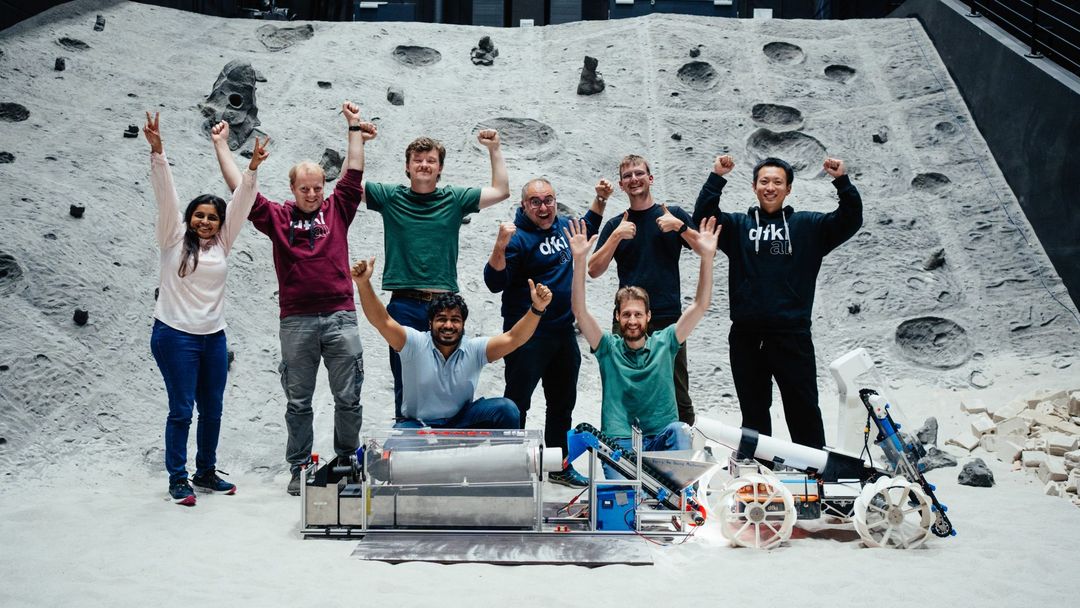
The goal of the ESA Space Resources Challenge is to develop technologies for processing lunar dust – known scientifically as regolith. From regolith, materials such as oxygen and construction elements can be extracted directly on the Moon. The aim is to ensure a sustainable and independent supply for future astronauts.
Mobile rover for resource extraction from lunar dust
The scenario: It’s the 2040s. Humans are permanently stationed on the Moon. Lunar resources are mined and processed locally. To efficiently extract resources such as oxygen or metals, astronauts must first sort regolith particles by size.
For this future scenario, Team BREMEN brings together two strong partners: the DLR Institute of Space Systems, with its expertise in collecting and processing materials on celestial bodies such as asteroids and the Moon, and the DFKI Robotics Innovation Center, internationally recognized for its expertise in space robotics and working in close collaboration with the Robotics Working Group at the University of Bremen.
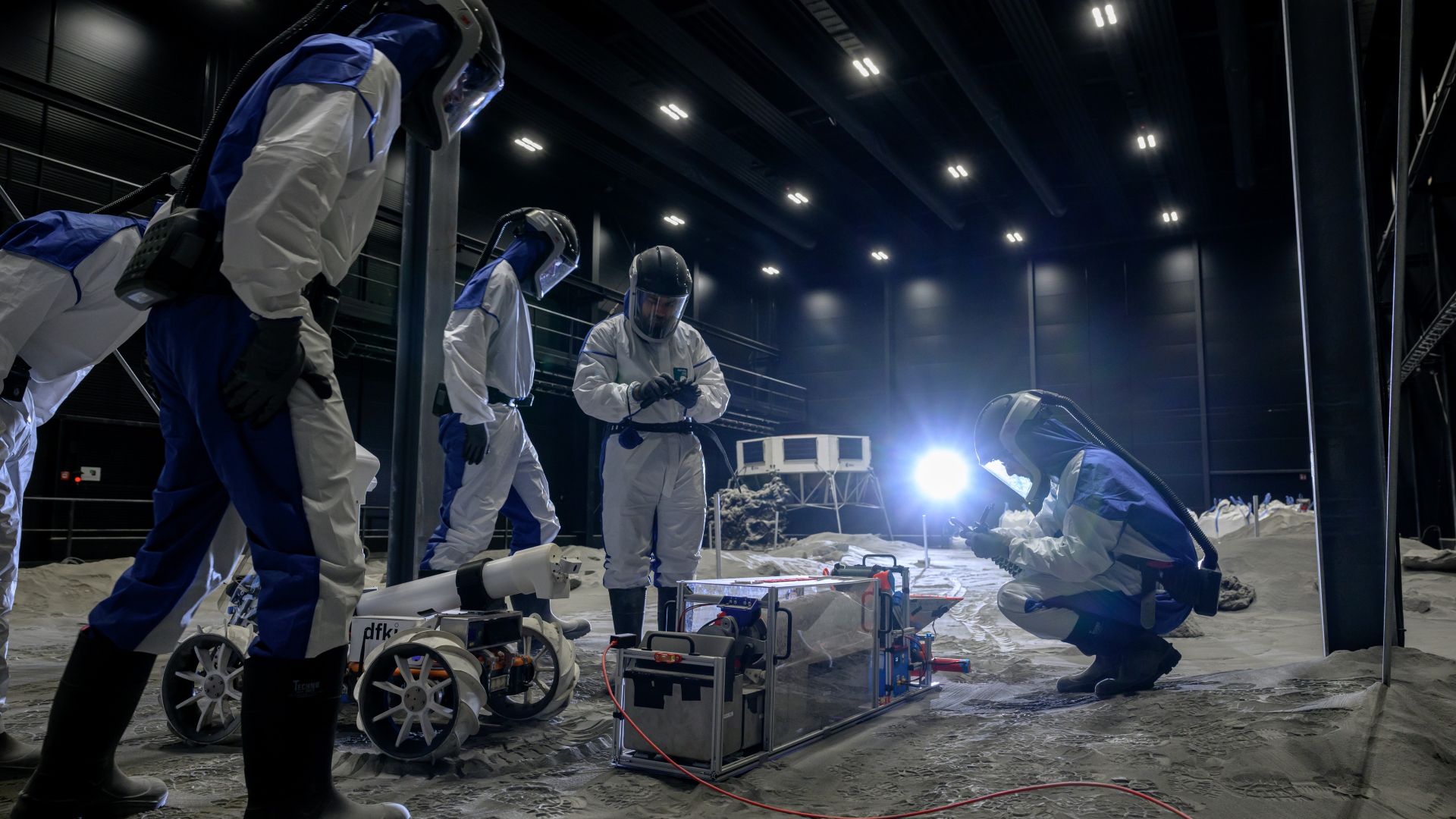
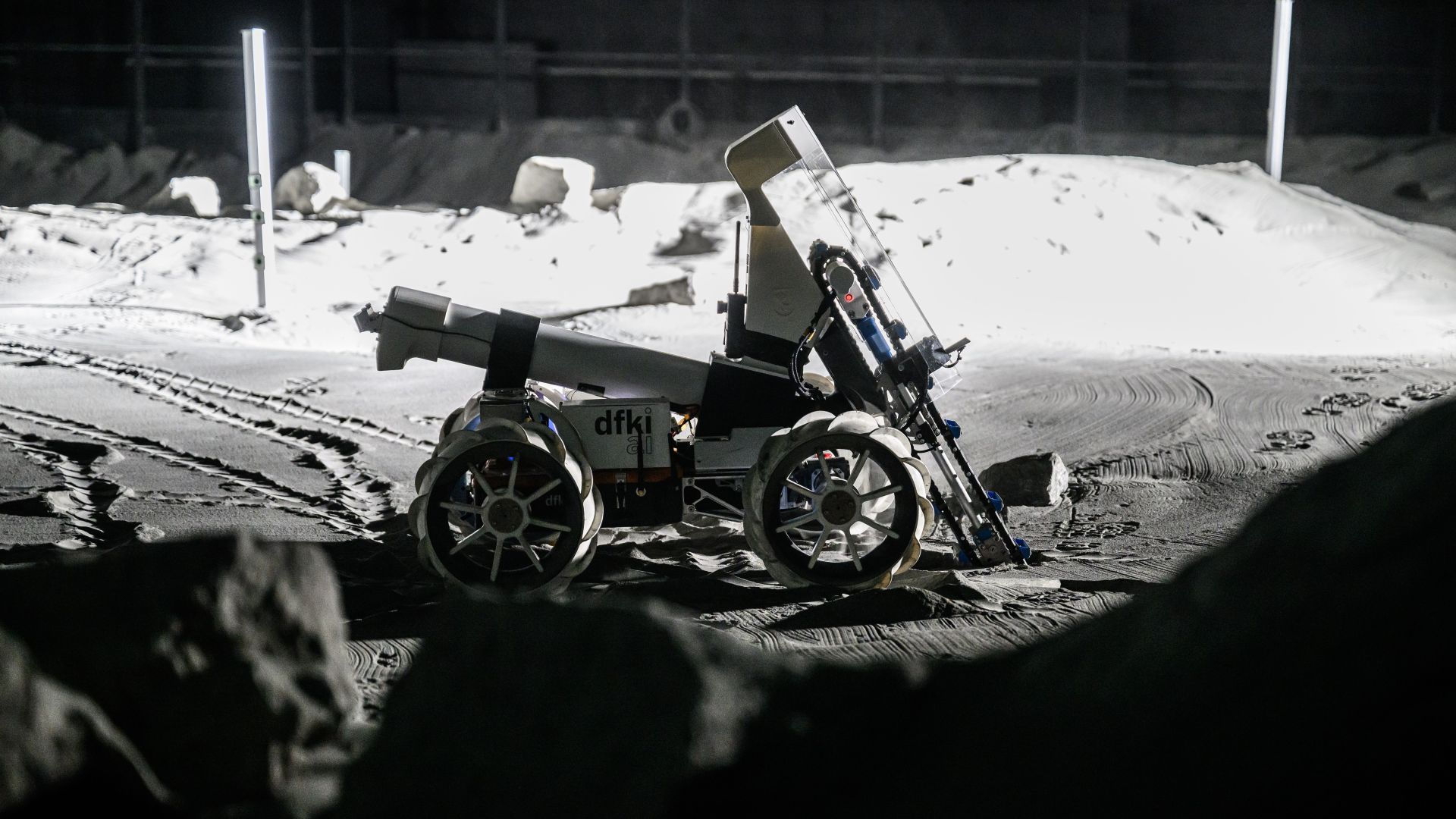
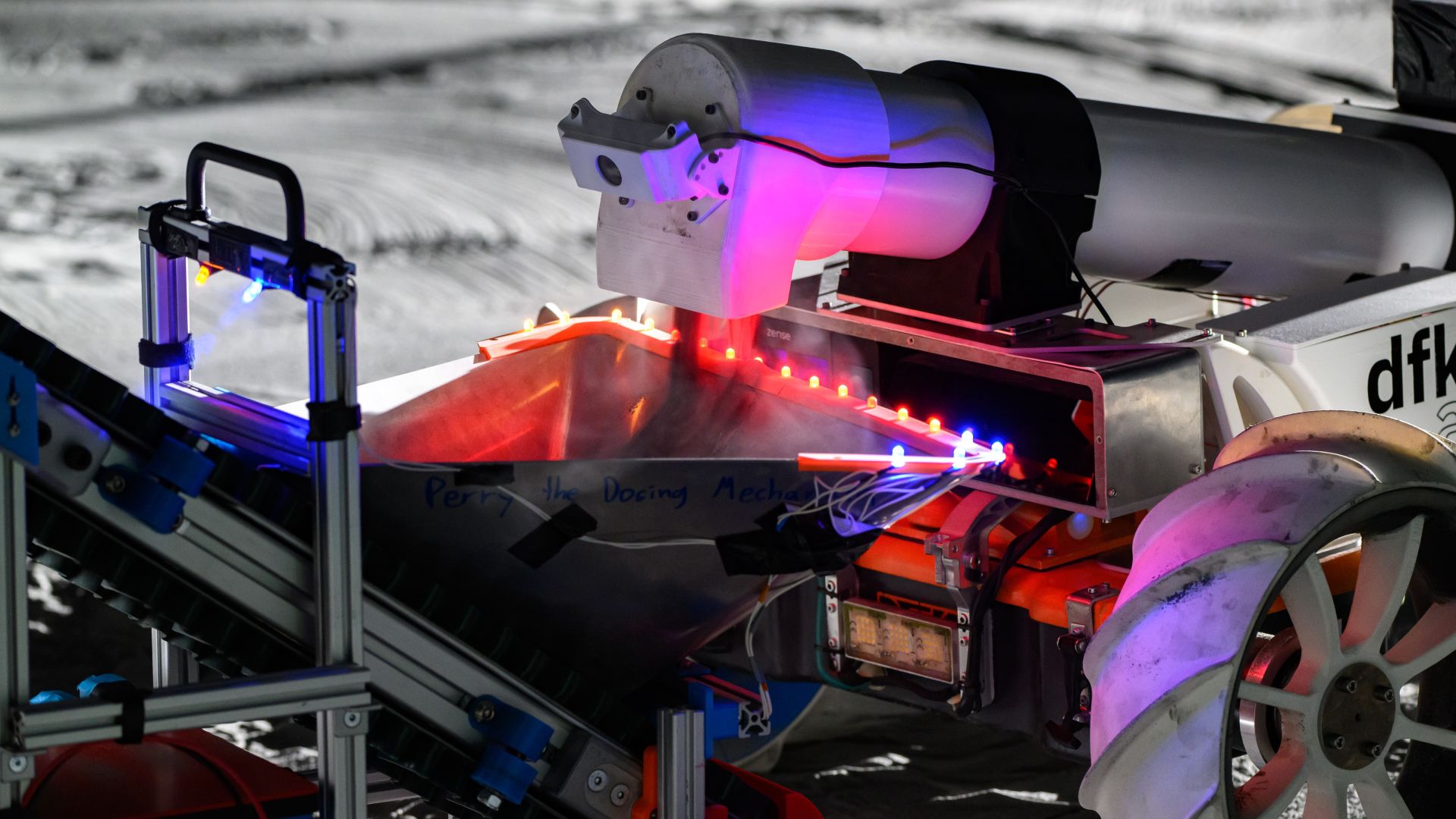
Together, they are developing a modular system consisting of the mobile rover Coyote III, which collects regolith and transports it to a stationary processing unit, where it is sorted by size and prepared for further use.
“Our goal is to develop technologies that enable a sustainable human presence on the Moon. This requires solutions that prove themselves directly on site – and that’s exactly what we’re testing in this competition. Our system performed very well, and we are very satisfied with the results,” says Dr. Paul Zabel, Project Manager at the DLR Institute of Space Systems.
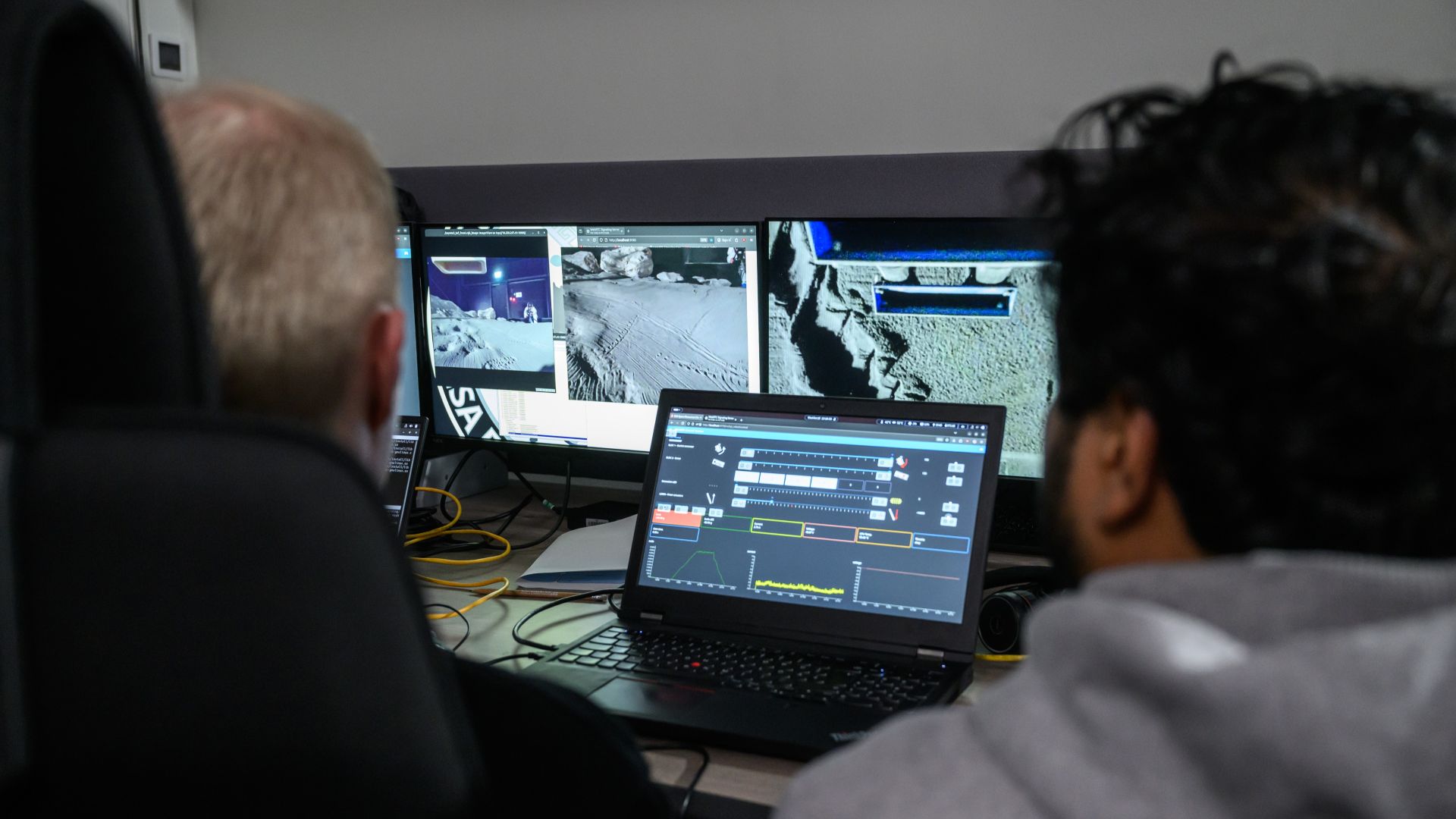
“Robotics is key to supporting humans in space. With our rover Coyote III, we demonstrated how a mechanically robust, all-terrain, and modularly expandable robot can reliably collect and analyze data, and navigate safely and efficiently on moon-like terrain,” adds Dr. Mehmed Yüksel, Head of the Space Robotics Team at the DFKI Robotics Innovation Center.
Team B.R.E.M.E.N. in international competition
Alongside Team BREMEN from Germany, teams from Poland, Canada, Denmark, and the United Kingdom are participating in the challenge. Each team contributes its expertise in robotics, materials science, and space technology.
Bremen, known as Germany’s City of Space, benefits from its unique research and industrial infrastructure. In addition to DLR and DFKI, numerous companies and universities in Bremen are active in the fields of spaceflight, robotics, and high technology.
About the ESA Space Resources Challenge
The ESA Space Resources Challenge is an initiative launched in 2021 by ESA and the European Space Resources Innovation Centre (ESRIC) to promote innovation and inspire the development of new solutions for Europe’s space program. The competition encourages industry and research institutions to apply for awards supporting further research. It fosters international collaboration between science, industry, and research organizations in advancing space resource utilization. The competition runs until November 2025, when the winning teams will be announced. The overall best team will receive €500,000 in ESA funding for further research, while the best team in the “Regolith Sorting” category will receive up to €250,000 from the Luxembourg Space Agency (LSA) and ESRIC.
About LUNA
The LUNA Analog Facility in Cologne is a globally unique installation for preparing future astronautical and robotic lunar missions. The LUNA hall features a 700 m² simulated lunar surface, filled with lunar dust that closely mimics real regolith. Rocks and terrain replicate lunar geology, while a sunlight simulator reproduces Moon-like lighting conditions. A section lowered by three meters allows drilling experiments, and an adjustable ramp enables slope testing.
The upcoming Gravity Offloading System will simulate lunar gravity using ceiling-mounted carriages and cable systems, allowing astronauts or rovers to move as if they weighed only one-sixth of their Earth weight. In addition, the FLEXhab habitat module for astronaut missions is already in place, and the EDEN LUNA research greenhouse will soon be connected as an external module. LUNA was officially inaugurated on September 25, 2024, and is jointly funded by DLR and ESA, with €25 million provided by the state of North Rhine-Westphalia (NRW).
(Joint press release from DLR and DFKI)