AI in Construction (AIC)
AI for the complete construction process and building lifecycle
Current Situation – Construction
The sector of building design, construction, renovation and facility management is one of the slowest in adoption of digitalization and automation technologies, even though there is a significant potential for time and cost savings, material saving, reuse and optimization and energy reduction. Due to the small profit margins and high percentage of small SMEs operating in the field, research and innovation in the field advance very slowly. At the same time, construction is one of the most challenging and risky activities from a human worker health perspective, making the sector unattractive to the workforce.
Potential of AI

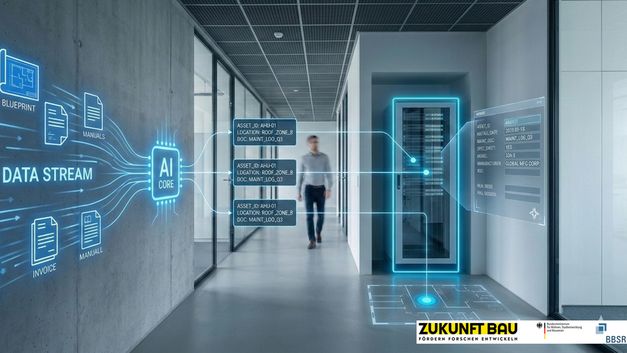
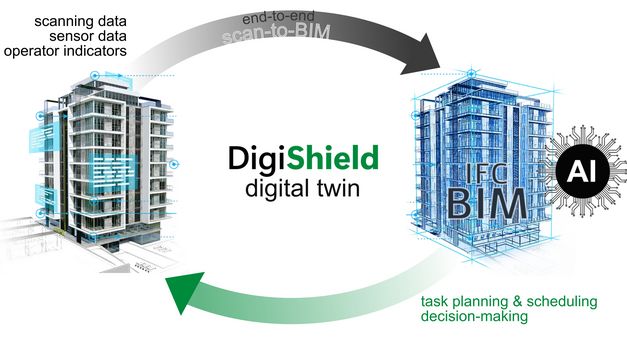
AI is already taking its first steps in the field and can contribute to a variety of applications related to the built environment. Computer Vision techniques can be used to transform unstructured 3D scans into building models (Scan-to-BIM) and enrich building digital twins with semantic information on building parts, materials and condition information. Their analysis with AI reasoning methods on 3D data can provide information for construction progress tracking and deviations, task planning and logistics optimization or renovation requirements. Multimodal AI approaches can reason over combined building data such as documentation, building models, technical reports and product passports to provide improvement suggestions for design and material selection, process execution and energy saving.
Meanwhile, robots equipped with perception sensors and reasoning capabilities can be used to perform autonomous inspections for scanning and damage detection or even take over or collaborate with humans on challenging and unsafe tasks involving handling of heavy materials or demolition tasks. Intelligent wearable devices such as exoskeletons and XR-devices can enhance worker capabilities, guide them in task execution and training and monitor their condition.
Challenges
In order for AI to deliver on this potential for construction, there are significant challenges that researchers need to address. Construction sites are extremely challenging and dynamic environments for perception where existing AI foundation models fail to perform and labeled data for training is scarce. The complexity of tasks and multidisciplinary involvement make the collection expert knowledge for advancing AI systems difficult. The variety of construction tasks make task-specific robotic devices not viable, indicating a need for multi-purpose construction robots that can be adapted to the task at hand on the fly. Meanwhile, acceptance of new technologies from industry representatives and management requires additional effort.
Competence Center
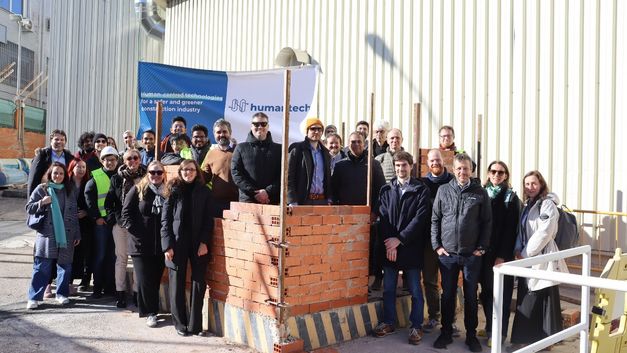
To address these challenges effectively, the DFKI competence center AIC - AI in Construction brings together the complementary competences on AI in construction topics from several 10 DFKI research departments from 7 different locations – (AV) Augmented Vision, (SDS) Smart Data and Knowledge Services, (RIC) Robotics Innovation Center, (MAP) Marine Perception, (CAS) Cooperative and Autonomous Systems, IWI (Institute for Information Systems), (EBLS) Experience-based Learning Systems, (DSA) Data Science and its Applications, (SAIROL) Systems AI for Robot Learning and (SAINT) Foundations of Systems AI. The competence center is led by Dr. Jason Rambach (AV) with experience in coordinating large AI in Construction projects (Horizon Europe project HumanTech) and currently serving as coordinator for the EuRobotics topic group Construction.
Key Persons and Competences
| Name | Research Department | Expertise |
|---|---|---|
| Dr. Jason Rambach | AV | 3D Scene Understanding and Multimodal Reasoning, Scan-to-BIM, Robot Perception |
| Marcel Mager | AV | Dissemination and Exploitation |
| Prof. Dr. Peter Fettke | IWI | Process Mining, Process Simulation, Process Prediction, Process Modeling, Digital Twins |
| Dr. Lisa Grewenig | EBLS | Process Flexibility, Experience-Based Design, Case-Based Reasoning, Hybrid AI |
| Dr. Daniel Kühn | RIC | Robotics, Locomotion, System Design |
| Dr. Alexandra Pehlken | MAP | Critical raw materials, Digital Twin, Design for Environment |
| Stanislav Frolov | SDS | Generative Models for Visual Data |
| Christoph Tieben | CAS | Outdoor Robotics, Navigation, Localization, Multi-Modal Sensor Fusion |
| Dr. Darko Obradovic | DSA | Multimodal Building Documents, Agentic Workflows |
| Dr. Joao Müller Carvalho | SAIROL | Robot Learning, Machine Learning, Robot Learning in Construction |
Contact
Dr. Jason Rambach
Jason.Rambach@dfki.de
Marcel Mager
Marcel.Mager@dfki.de
DFKI Research Department
Augmented Vision
Trippstadter Str. 122
67663 Kaiserslautern