
One year of DFKI in Darmstadt: learning robots, efficient data analysis and secure AI systems
| Human-Machine Interaction | Robotics | Foundations of Systems AI | Systems AI for Decision Support | Systems AI for Robot Learning | Darmstadt
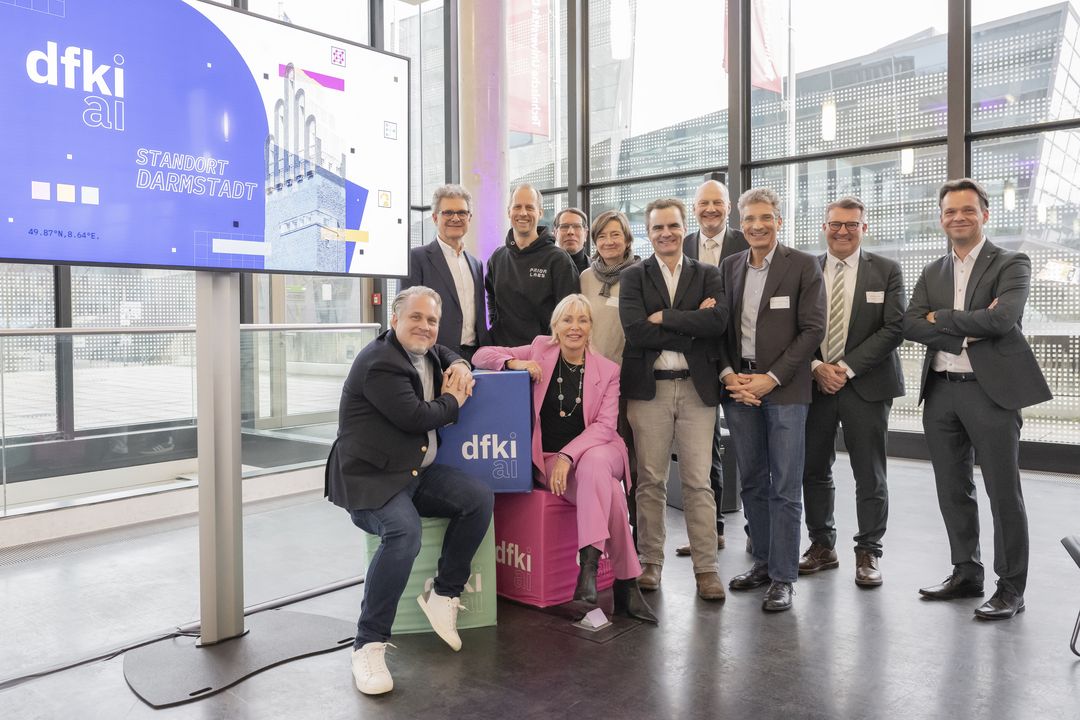
Prof. Antonio Krüger, CEO of DFKI: 'To compete globally in the field of AI and consolidate Europe's digital sovereignty, we need courage and foresight, as well as investment in secure and reliable AI systems. Our colleagues in Darmstadt are making a vital contribution to strengthening DFKI's expertise and basic research through their excellent work in the field of systemic AI. They are providing sustainable impetus for business, science and society in the process. We are delighted that Darmstadt has become such a valuable and permanent part of the DFKI family. '
Minister of Science Timon Gremmels had to cancel at short notice, but he sent his congratulations : 'As the state government, we are actively supporting the forward-looking topic of AI, both by promoting excellent research and by collaborating with businesses and industries. TU Darmstadt is playing an outstanding role here, having proven its excellence in AI research by successfully acquiring the Cluster of Excellence, Responsible Artificial Intelligence. The new DFKI location in Darmstadt will help to implement these findings in collaboration with partners in other locations and federal states. The rapid acceptance into the DFKI family shows that Hesse has an active AI ecosystem to offer, from which both parties benefit.'
Prof. Dr. Kristina Sinemus, Hesse Minister for Digitalisation and Innovation: 'Through our interdepartmental AI agenda, we aim to reinforce Hesse's position as a leading AI hub in the long term. Since August 2025, we have been promoting the establishment of an AI and quantum computing application centre at the Bertramshof Future Campus in Frankfurt, which will combine research, technology development and economic application. The DFKI location in Darmstadt will bridge the gap between science and practice and act as a central partner and innovation accelerator.'
Prof. Dr.-Ing. Matthias Oechsner, Vice President for Research at TU Darmstadt: 'The DFKI site is an integral part of the dynamic and powerful AI ecosystem that we are developing around TU Darmstadt and in Hesse. This trusting cooperation is generating creative and bold ideas for the future of systemic AI at the Darmstadt site, in collaboration with strong partners at DFKI, and across science, industry, and society. These ideas are yielding the innovative solutions and applications needed to effectively address the major challenges of tomorrow and beyond. This is responsibility in action for a successful future.'
Prof. Dr. Jan Peters, site spokesperson and head of the research area Systemic AI for Learning Robots: 'I am delighted to be conducting basic research alongside Kristian Kersting, Carsten Binnig, and the researchers at DFKI in Darmstadt, shedding light on the black box of AI in the process. Our work has been recognised at renowned conferences. By doing so, we are actively shaping the research landscape in the field of AI, together with our partners at DFKI and within the Hessian AI ecosystem.'
The path to autonomous robots
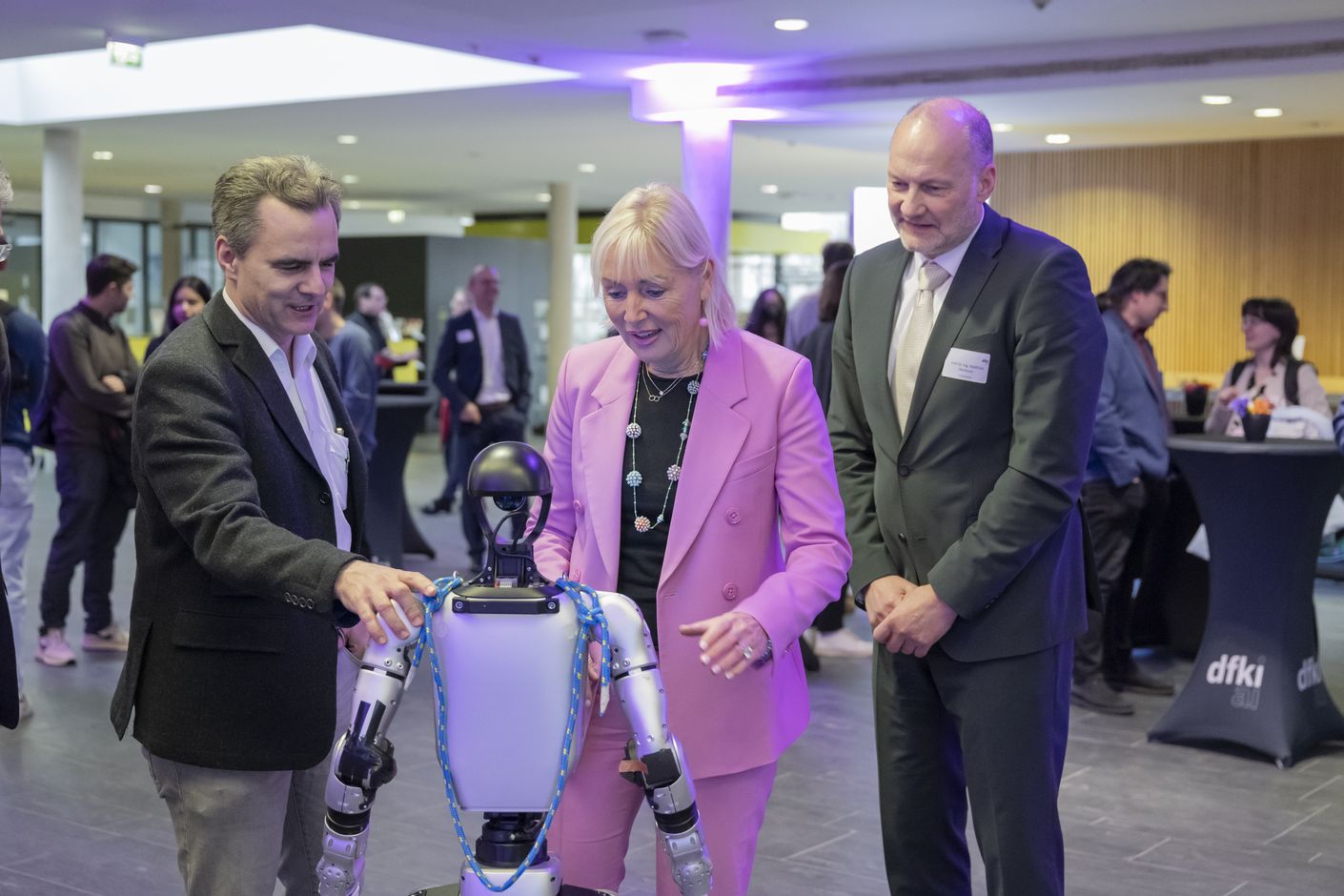
In order to enable robots to learn independently, the research area 'Systemic AI for Learning Robots' (SAIROL), led by Prof. Dr. Jan Peters, is developing special AI. To this end, the researchers are using reinforcement learning and simulations, among other techniques. This will enable robots to be used in dynamic environments.
Safe and human centric AI
AI is now part of most people's everyday lives. To ensure it provides optimal support and has no negative effects, the ‘Fundamentals of Systemic AI’ research area (SAINT), led by Prof. Dr. Kristian Kersting, is investigating AI safety and traceable AI systems. The aim is to prevent models from exhibiting undesirable behaviour and generating harmful output at random. This will make AI safer for everyone. Researchers in the 'Fundamentals of Systemic AI' research area have developed a crisis management pilot system. Based on a description of a crisis situation, the agentic AI system predicts how the various parties involved might behave. This enables decisions to be made that take into account as many factors as possible. In this way, crisis management in politics and society can become more forward-looking.
Fast decisions thanks to AI
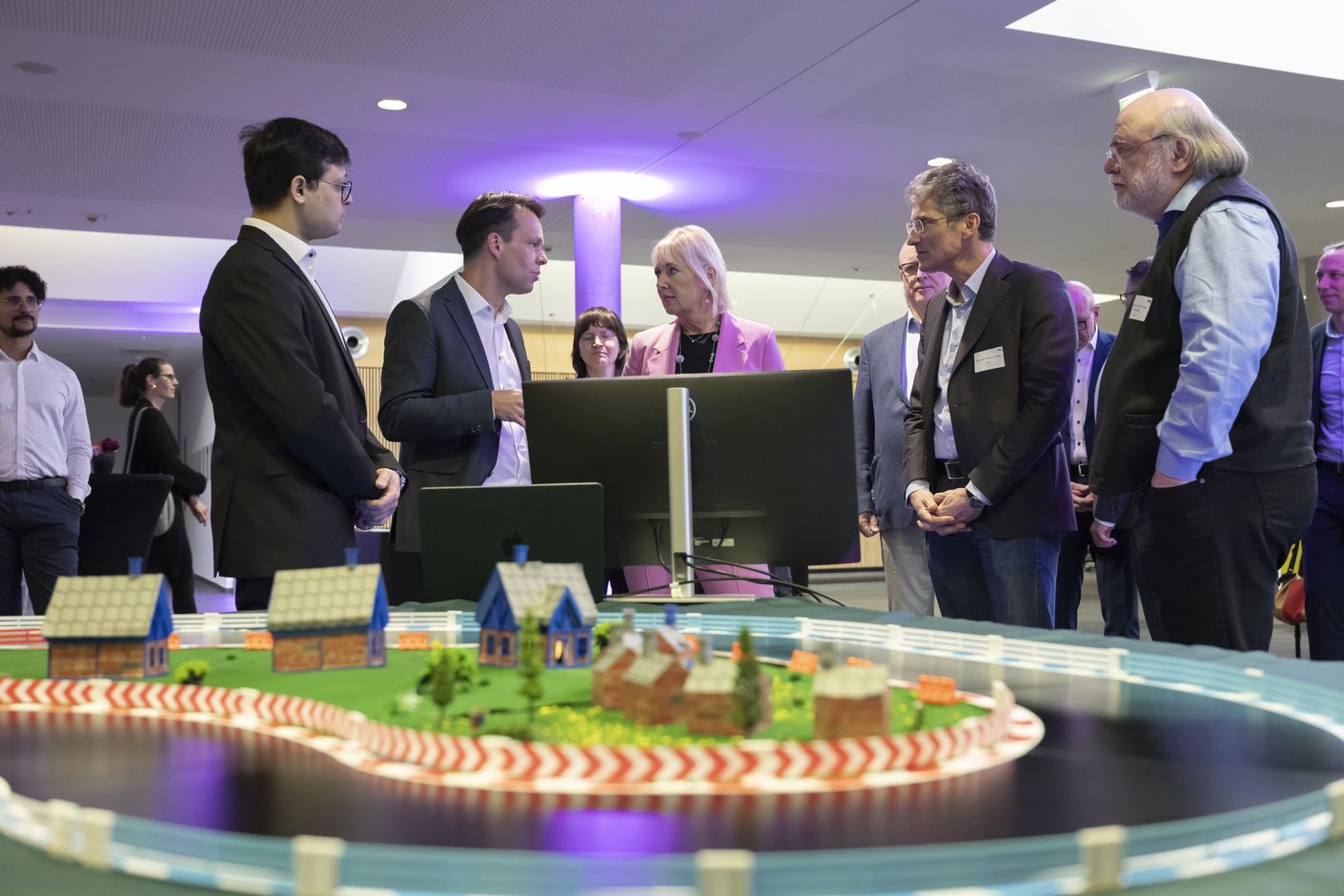
Good decisions require comprehensive data. In companies and institutions today, data-based decision-making often still requires manual design of data processing and analysis pipelines. This is time-consuming and requires the involvement of specialists. Timing is also crucial: the relevant information must be available at the right time. Given the vast quantities of data generated worldwide every second, it is a significant challenge to filter and analyse data quickly enough. Data can take many different forms, including written words, sensor measurements, audio recordings, photos and videos. To make data-driven decision-making accessible to a broad audience without in-depth programming or AI knowledge, researchers in the 'Systemic AI for Decision Support' (SAIDE) research area, led by Prof. Dr. Carsten Binnig, are automating the design of data processing and analysis pipelines using systems AI methods.
Press contact:
Christian Heyer
- Christian.Heyer@dfki.de
- Phone: +49 631 20575 1710