Studies have shown that fine motor skills can be measurably impaired in microgravity. Movements often become less stable and less precise, posing particular challenges for complex manipulation tasks. This not only complicates scientific experiments and technical operations on board, but can also increase the cognitive and physical workload of the crew.
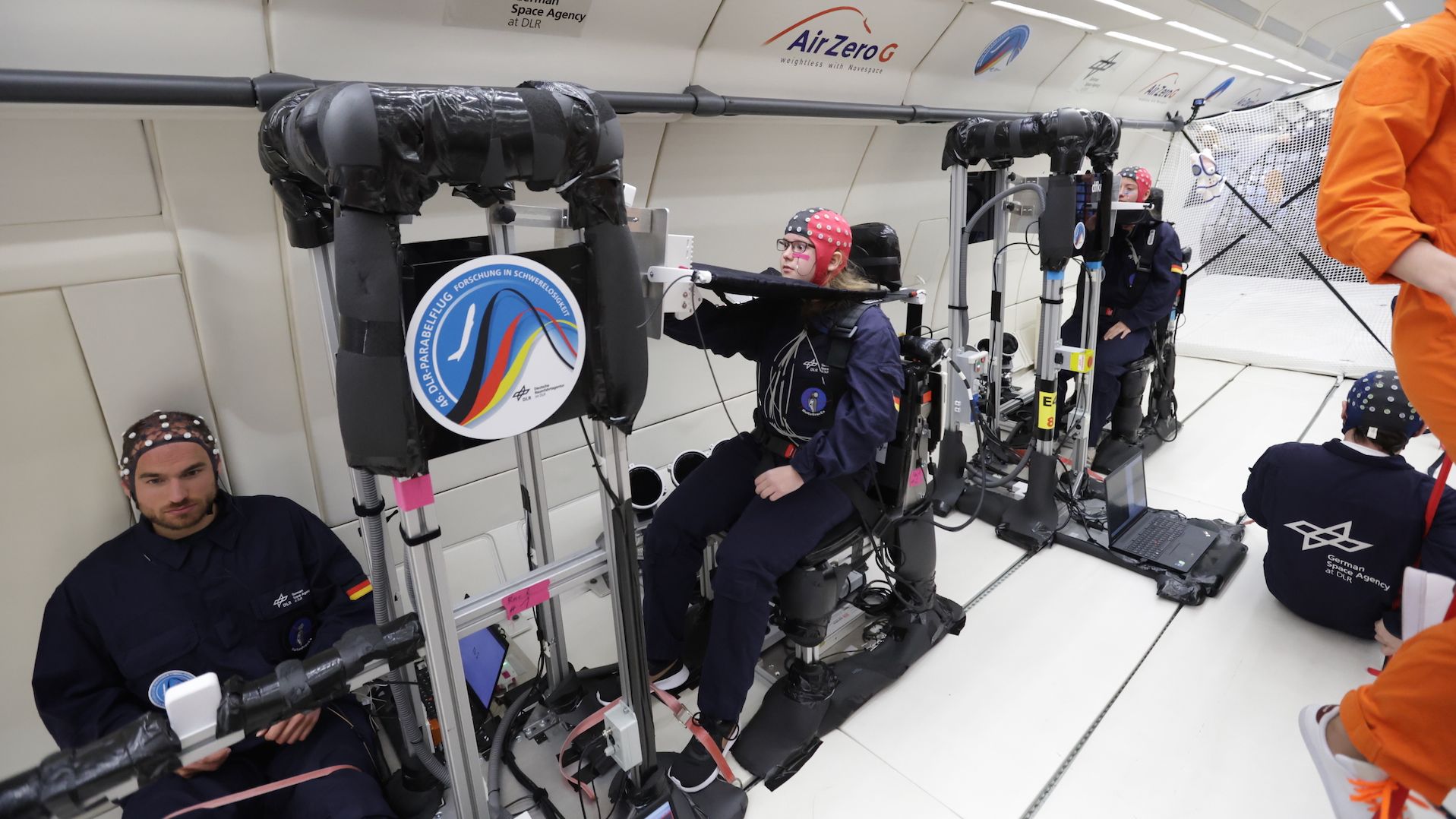
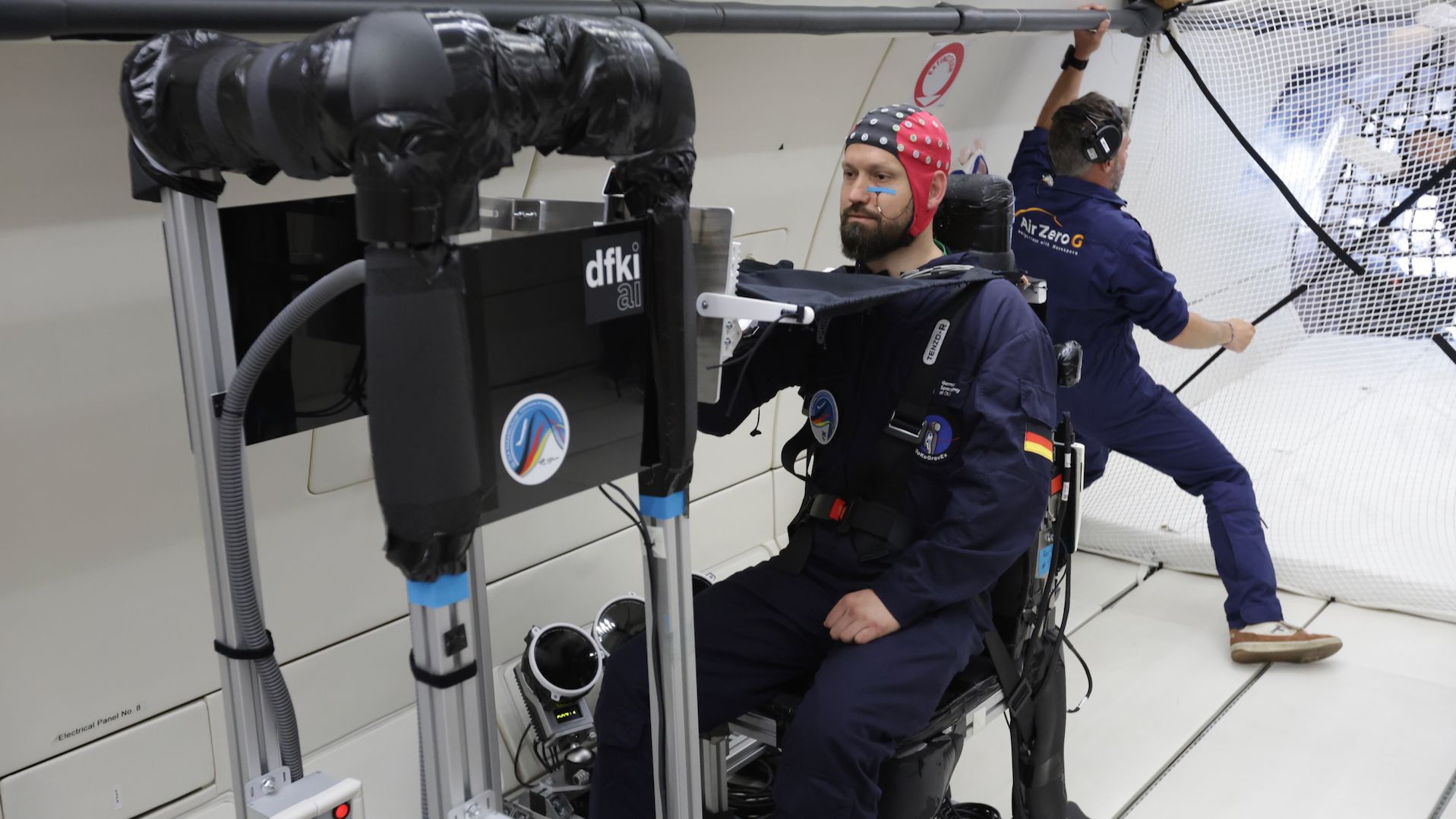
Against this backdrop, the DFKI Robotics Innovation Center in Bremen and the Chair of Medical Technology Systems at the University of Duisburg-Essen (UDE) are investigating, as part of the “MikroBeM” project, how fine motor movement sequences can be trained on Earth under space-like conditions. To this end, the researchers have developed a robotic exoskeleton that compensates for the natural weight of the arm through targeted force assistance, thereby simulating the reduced load experienced in microgravity. Using artificial intelligence methods, this assistance can be adapted to individual users. The long-term goal is to establish the foundation for cost-effective, personalized training approaches that can better prepare astronauts for future long-duration missions to the Moon and Mars.
MikroBeM is funded as part of the INNOSPACE network ‘Space2Health’, an initiative of the German Space Agency at the DLR, financed by the Federal Ministry of Research, Technology and Space.
Transferability of exoskeleton training to real weightlessness
The study investigates whether fine motor training with an exoskeleton under simulated microgravity conditions can be transferred to real weightlessness – with the potential to both improve astronauts’ motor performance and reduce their operational workload. To explore this question, the researchers have already participated in the 42nd and 44th parabolic flight campaigns organised by the German Space Agency at DLR.
Parabolic flights are among the few methods available for creating real microgravity conditions on Earth, albeit for short periods of time. Through repeated ascent and descent manoeuvres, each parabola generates approximately 22 seconds of weightlessness. In total, a single flight provides around eleven minutes of microgravity.
Participation in the 46th DLR parabolic flight campaign
Initial findings from the previous campaigns indicate potential training effects; however, the available data set was not yet sufficient for a statistically robust evaluation. Participation in the 46th DLR parabolic flight campaign therefore primarily aimed to expand and validate the existing data basis.
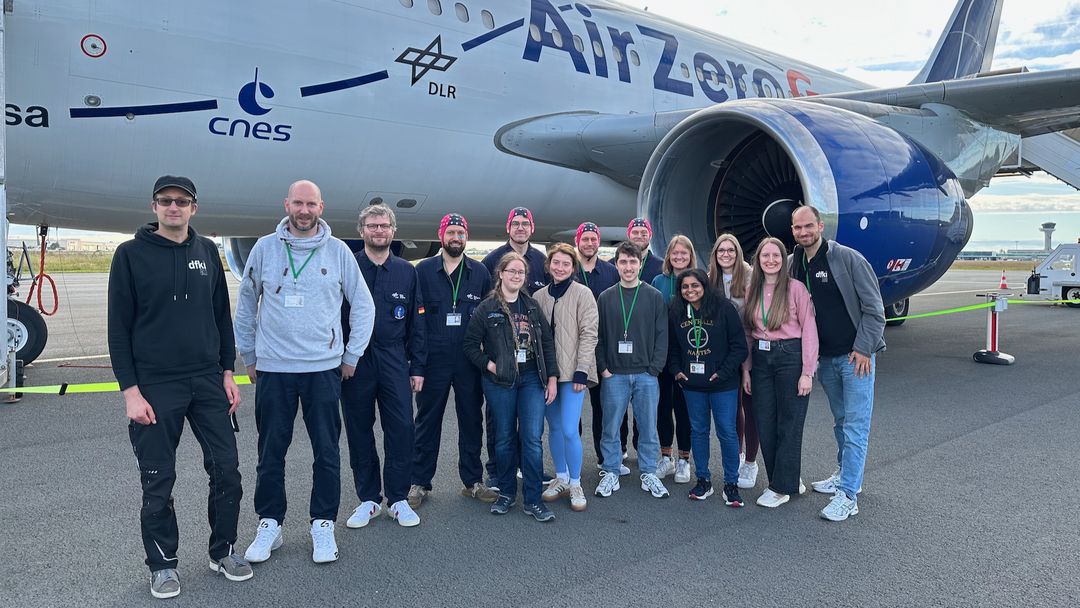
The campaign took place from 11 to 22 May 2026 in Bordeaux, France, and included three parabolic flights. The experiment conducted by DFKI and UDE was one of eight scientific projects selected to fly aboard the Airbus A310 “Zero G”.
Experiment and data collection on board
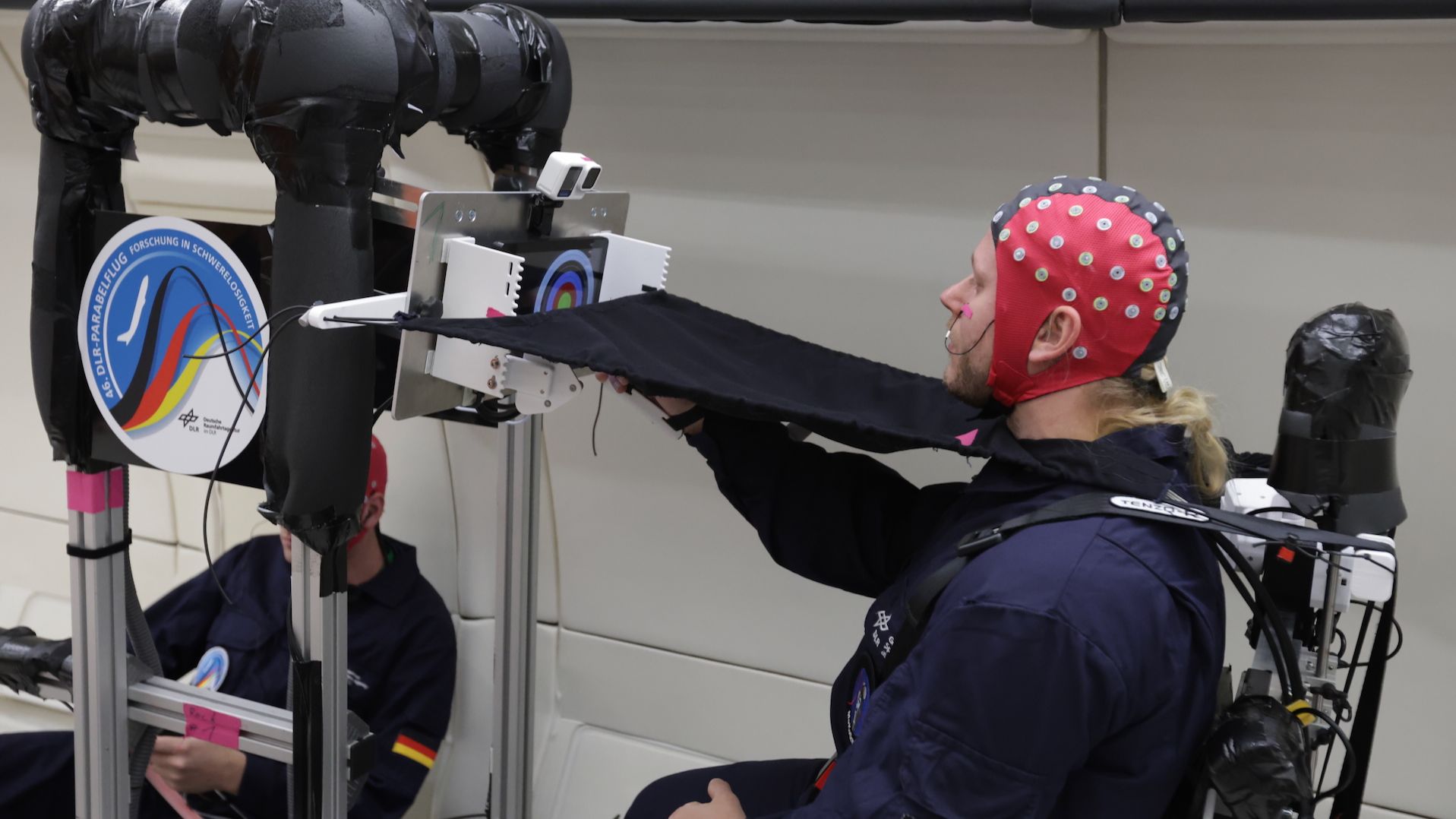
At the core of the experiment is a fine-motor task: during periods of weightlessness, participants were required to use the index finger of their right hand to hit the center of a target displayed on a screen. To prevent visual feedback-based movement corrections, the arm was covered with a cape. Throughout the trials, muscle and brain activity, heart rate variability, and participants’ movement trajectories were recorded.
The participants were divided into two groups: one group had trained the task for several weeks in the laboratory using an robotic exoskeleton under simulated microgravity conditions, while the second group performed the same task – which is simple under Earth’s gravity – without prior training and only after a brief familiarization with the setup. This experimental design enables the researchers to investigate whether, and to what extent, learned movement patterns and the associated physiological responses in real microgravity differ from those of the untrained control group.
Successful campaign and future applications
The research team drew a positive conclusion following the completion of the campaign. Throughout the entire experiment, no measurement failures occurred. As a result, data from a total of 180 parabolic flights was successfully collected, providing a solid foundation for further scientific analysis.
In the long term, the findings could not only enhance preparation for future space missions, but also offer new insights for applications in rehabilitation, neurotechnology, and motor learning. In particular, the question of how humans learn and transfer movements under altered physical conditions is highly relevant beyond the context of space exploration.
Scientific contacts:
Marc Tabie, M.Sc.
DFKI Robotics Innovation Center
Telephone: +49 421 17845 6622
Email: Marc.Tabie@dfki.de
Prof. Dr Elsa Kirchner
University of Duisburg-Essen/DFKI Robotics Innovation Center
Telephone: +49 203 379 4135 (Secretariat: +49 203 379 4261)
Email: elsa.kirchenr@uni-due.de / Elsa.Kirchner@dfki.de