

Prof. Dr. Jan Peters – Inductive Biases for Robot Reinforcement Learning
In his talk, Prof. Jan Peters discusses how inductive biases derived from robotics, physics, and control can enable robots to learn complex motor skills from just a few trials, with examples ranging from manipulation and juggling to robot table tennis.
Abstract und Bio
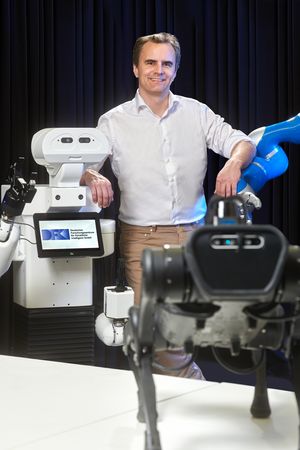
Abstract: Autonomous robots that can assist humans in situations of daily life have been a long standing vision of robotics, artificial intelligence, and cognitive sciences. A first step towards this goal is to create robots that can learn tasks triggered by environmental context or higher level instruction. However, learning techniques have yet to live up to this promise as only few methods manage to scale to high-dimensional manipulator or humanoid robots. In this talk, we investigate a general framework suitable for learning motor skills in robotics which is based on the principles behind many analytical robotics approaches. To accomplish robot reinforcement learning learning from just few trials, the learning system can no longer explore all learn-able solutions but has to prioritize one solution over others – independent of the observed data. Such prioritization requires explicit or implicit assumptions, often called ‘induction biases’ in machine learning. Extrapolation to new robot learning tasks requires induction biases deeply rooted in general principles and domain knowledge from robotics, physics and control. Empirical evaluations on a several robot systems illustrate the effectiveness and applicability to learning control on an anthropomorphic robot arm. These robot motor skills range from toy examples (e.g., paddling a ball, ball-in-a-cup) to playing robot table tennis, juggling and manipulation of various objects.
Bio: Jan Peters is a full professor (W3) for Intelligent Autonomous Systems at the Computer Science Department of the Technische Universitaet Darmstadt since 2011, and, at the same time, he is the dept head of the research department on Systems AI for Robot Learning (SAIROL) at the German Research Center for Artificial Intelligence (Deutsches Forschungszentrum für Künstliche Intelligenz, DFKI) since 2022. He is also is a founding research faculty member of the Hessian Center for Artificial Intelligence. Jan Peters has received the Dick Volz Best 2007 US PhD Thesis Runner-Up Award, the Robotics: Science & Systems – Early Career Spotlight, the INNS Young Investigator Award, and the IEEE Robotics & Automation Society’s Early Career Award as well as numerous best paper awards. In 2015, he received an ERC Starting Grant and in 2019, he was appointed IEEE Fellow, in 2020 ELLIS fellow and in 2021 AAIA fellow. Despite being a faculty member at TU Darmstadt only since 2011, Jan Peters has already nurtured a series of outstanding young researchers into successful careers. These include new faculty members at leading universities in the USA, Japan, Germany, Finland and Holland, postdoctoral scholars at top computer science departments (including MIT, CMU, and Berkeley) and young leaders at top AI companies (including Amazon, Boston Dynamics, Google and Facebook/Meta). Jan Peters has studied Computer Science, Electrical, Mechanical and Control Engineering at TU Munich and FernUni Hagen in Germany, at the National University of Singapore (NUS) and the University of Southern California (USC). He has received four Master’s degrees in these disciplines as well as a Computer Science PhD from USC. Jan Peters has performed research in Germany at DLR, TU Munich and the Max Planck Institute for Biological Cybernetics (in addition to the institutions above), in Japan at the Advanced Telecommunication Research Center (ATR), at USC and at both NUS and Siemens Advanced Engineering in Singapore. He has led research groups on Machine Learning for Robotics at the Max Planck Institutes for Biological Cybernetics (2007-2010) and Intelligent Systems (2010-2021).
Accepted Papers
DFKI is represented at IJCAI-ECAI 2026 with twelve accepted papers. The contributions reflect the research center's broad scientific expertise, spanning foundation models and computer vision to robotics, semantic technologies, explainable AI, medical applications, environmental monitoring, and software engineering.
A Scalable Cross-Domain Event Extraction System via a Unified Generative Training Framework
Abstract: Event extraction is fundamental to information extraction. Prior approaches often separate event detection and argument extraction or depend on dataset-specific designs, limiting scalability and cross-domain generalization. We propose a unified generative, sequence-to-sequence framework that performs all event extraction subtasks jointly and supports both end-to-end and pipeline configurations. We fine-tune pre-trained language models on multiple event datasets across diverse domains, enabling a single model to retain domain-specific semantics while generalizing over large, evolving label spaces. Cross-domain experiments show strong, robust performance across datasets, demonstrating a scalable solution for real-world event extraction. We demonstrate these capabilities through a web-based application tailored for researchers and practitioners. The platform supports inspection of different configurations and facilitates cross-domain comparisons.
Authors: Siting Liang, Omar Adjali, Bhatti Omair, Daniel Sonntag
Track: Demonstrations Track
Beyond Heatmaps: Unsupervised Concept-Graph Reasoning for Interpretable Visual Explanation
A Graph-based Concept Bottleneck Model (G-CBM), an intrinsically interpretable framework that performs unsupervised concept discovery via Non-negative Matrix Factorization (NMF) and represents the discovered concepts as nodes in a per-image concept graph representation. G-CBM matches region-level features to these concept nodes—providing concept grounding and capturing concept recurrence across the image—and applies a tunable concept filtering threshold τ to suppress weak region-level features. A Graph Attention Network (GAT) then performs concept-level reasoning by modelling nonlinear dependencies across nodes.
Authors: Md Mohasin Hossain , Anar Amirli , Robert Leist, Md Abdul Kadir, and Daniel Sonntag
Workshop: IJCAI 2026 Workshop on Explainable Artificial Intelligence (XAI)
Workshop website: https://sites.google.com/view/xai-workshop-ijcai-2026/home
Beyond Text-Only Code Generation: Dynamic Visual Understanding in Software Engineering
This paper explores the integration of dynamic visual understanding into code generation systems, enabling AI models to leverage visual information from software artifacts alongside textual inputs to improve code generation and software engineering tasks.
Authors: Tuan Anh Tran, László Kopásci, Daniel Sonntag
Workshop: Generative Code Intelligence (GeCoIn) Workshop proposal
Workshop website: GeCoIn - Generative Code Intelligence Workshop | IJCAI-ECAI 2026
Evaluating Explanation-Driven Vision–Language Reasoning via Generation Order Interventions
Natural language explanations are widely used to improve the transparency and evaluation of vision–language reasoning. While prior work mainly adopts a post-hoc (answer-first) paradigm, modern LVLMs increasingly generate rationales before answers, suggesting a closer connection to the reasoning process. We systematically compare answer-first and rationale-first generation across QA, visual entailment, and grounding tasks, showing that explanation order significantly affects both prediction accuracy and reasoning faithfulness. Larger models better support rationale-first reasoning, whereas answer-first generation is generally more robust to formatting errors.
Authors: Siting Liang, Luca Ripper, Omar Adjali, Daniel Sonntag
Workshop: IJCAI 2026 Workshop on Explainable Artificial Intelligence (XAI)
Workshop website: https://sites.google.com/view/xai-workshop-ijcai-2026/home
Integrating Atmospheric Dispersion Modeling Priors into Cuboid Splatting for Spatiotemporal Reconstruction of Airborne Radioiodine After Nuclear Accidents
Abstract: In nuclear power plant accidents, airborne radioiodine poses major health risks, making reliable reconstructions of its spatiotemporal distribution crucial for emergency management. Current state-of-the-art prognosis systems use atmospheric dispersion modeling but ignore posterior evidence from emergency care centers, comprising movement profiles and thyroid measurements of affected individuals. A first study showed that the AI method Cuboid Splatting can reconstruct iodine air concentrations from such data but it ignores simulations from established prognosis systems.
Our multidisciplinary team extends Cuboid Splatting by incorporating these simulations as priors and subsequently correcting them using movement and thyroid data. Several ways to translate and correct priors are developed. The best-performing approaches are combined into a novel Cuboid Splatting-with-prior mechanism, which we evaluate using constructed prior scenarios representing different error types and intensities.
Using Cuboid Splatting-with-prior yields more accurate reconstructions than (i) the used dispersion simulations alone and (ii) plain Cuboid Splatting without prior. Across reconstructions, the mean scenario error is 19.61%, improving on (i) by 28.02pp and on (ii) by 89.86pp, the latter with particularly large gains at high spatial resolution. These results demonstrate that combining simulation-based priors with measurement-based posterior inference can substantially improve the reconstruction of iodine air activity concentrations in nuclear emergencies.
Authors: Mareike Böckel, Stephan Doerfel, Kathrin Meisenberg, Oliver Meisenberg, Max Friedrich, Mattis Hartwig
Track: Special Track on AI and Social Good
Interactive Open-Set Semantic Mapping with a 3D Scene Graph Backend
Abstract: While Open-Set Semantic Mapping and 3D Semantic Scene Graphs (3DSSGs) have become established paradigms in robotic perception in recent years, most existing works are limited to small environments or sacrifice geometric detail and instance granularity for scalability. Deploying these systems at scale for large multi-room environments remains a major challenge due to the computational overhead of high-dimensional feature integration and the maintenance of the 3DSSG structure. In this paper, we demonstrate a modular mapping architecture that establishes 3D Semantic Scene Graphs (3DSSGs) as its foundational backend. Unlike approaches that generate scene graphs as a post-processing step, our system maintains the graph as the primary, incrementally updated knowledge representation. Our architecture is optimized for GPU-accelerated operations, enabling the dense representation of extensive environments containing thousands of unique object instances, supporting open-vocabulary queries via CLIP features without requiring any additional post-processing steps. In this live demonstration, we showcase our pipeline processing large-scale data from the Habitat Matterport 3D (HM3D) dataset as well as live data collected from a handheld device. Attendees will interact with the generated maps by performing real-time, open-set queries (e.g., “find the vintage wooden chair”) across complex, multi-story environments, highlights the system's capability to represent dynamic, human-aligned environmental understanding suitable for downstream robotic tasks.
Demo video: https://youtu.be/ZpUPamQJ18c
Authors: Felix Igelbrink, Lennart Niecksch, Martin Günther, Marian Renz, Oscar Lima, Martin Atzmueller
Track: Demonstrations Track
Making Weak Supervision Interactive: Exploring Transfer from Sound Libraries to Passive Acoustic Monitoring Data
Abstract: Acoustic Monitoring (PAM), an increasingly popular method for wildlife monitoring, generates large volumes of data whose analysis depends on instance-level annotations that are costly to obtain. Archival sound collections provide weak labels that lack temporal localisation. In prior work, we demonstrated that Multiple Instance Learning (MIL) can extract approximate event locations from weakly labelled PAM data, suggesting it may be applied to sound collection data.
This demo operationalizes that approach within an interactive workflow that connects weakly annotated sound collections to downstream PAM deployment. The system supports configurable MIL-based localisation, lightweight interactive refinement, and transfer to an independent PAM dataset.
We carried out a preliminary evaluation with an actual sound library from a museum collection and a benchmark PAM dataset. Results confirm that weakly annotated sound collections can serve as a viable training signal for downstream PAM detection and illustrate differences between alternative MIL instantiations under real transfer conditions.
Demo video: cst.dfki.de/projects-weak-supervision-demo
Authors: Novruz Mammadli, Rida Saghir, Kanwar Ammar Ali, Prathmesh Doddanawar, Thiago S. Gouvêa, Daniel Sonntag
Track: Demonstrations Track
Mapping the Efficiency Landscape of Small Language Models
Abstract: Large language models (LLMs) dominate both everyday and specialized applications, but their high computational demand, energy consumption, and privacy risks are increasingly critiqued. Small language models (SLMs) mitigate these drawbacks and are gaining momentum in scenarios where full LLM capabilities are not required, such as agents, industrial systems, or edge devices. Nevertheless, a systematic comparison of model capabilities, energy usage, and scaling behavior has not been conducted yet. We evaluate 70+ SLMs from 2023–2025 on five task-specific benchmarks and compare them with two popular LLMs, revealing key trade-offs between energy, performance, and model selection. Our findings challenge common assumptions: First, smaller models are not automatically more efficient, and energy increases do not guarantee performance gains. Second, newer SLMs show clear improvements in performance–energy trade-offs, though the progress begins to plateau. Last, the efficiency landscape forms a clear Pareto frontier: initial energy increases yield substantial gains, but the last percentage points of performance need orders of magnitude more energy. These results highlight diminishing returns of scaling and emphasize the need for informed, task-aware model selection rather than size-driven choices.
Authors: Fabian Reichwald, Lukas Schiesser, Christiane Plociennik, Leonhard Kunz, Simon Pukrop, Martin Ruskowski, Oliver Thomas
Track: Main Track
PhotoGraph: Claim-Centric Knowledge Graphs for Personal Photo Management
PhotoGraph introduces a claim-centric knowledge graph for personal photo management, where AI-generated observations (e.g., people, objects, events, locations) are stored as claims with evidence, confidence scores, and provenance rather than as unquestioned facts. This allows users to review, correct, and validate AI predictions, enabling more trustworthy photo search, event organization, and photobook generation. The approach emphasizes explainability, human-in-the-loop refinement, and fact-grounded visual storytelling.
Authors: Omair Shahzad Bhatti, Abdulrahman Mohamed Selim, László Kopácsi, Michael Barz, Daniel Sonntag
Workshop: GenAIK-NORA: The Joint Workshop on Generative AI and Knowledge Graphs and KNOwledge GRaphs & Agentic Systems Interplay
Workshop website: https://nora-workshop.github.io/GENAIK-NORA-2026/
Structuring Annotation Label Spaces by Natural Language Concept Elicitation and Ontology Grounding
Annotation remains a central bottleneck in data-centric AI workflows, particularly in expert-driven domains where labels encode complex and evolving domain knowledge. Existing annotation tools typically rely on flat, task-specific label sets that lack semantic structure, interoperability, and principled integration with established knowledge bases. Conversely, authoritative ontologies provide shared vocabularies and formal relations but are often too rigid and difficult for domain experts to navigate and extend during annotation setup.
We present a demonstration system for LLM-assisted label space construction, enabling experts to define, structure, and ground annotation concepts through natural language interaction. The system follows a grounding-first strategy that prioritises alignment with authoritative ontologies and domain-relevant knowledge sources. When experts introduce novel concepts not covered by existing resources, the system generates local OWL-based concept representations with explicit provenance. The resulting session-specific ontology defines a fixed semantic contract for subsequent annotation, ensuring both semantic precision and task-level flexibility.
We demonstrate the workflow in a bioacoustic annotation scenario and illustrate how human-in-the-loop, tool-mediated grounding can connect natural language concept elicitation with ontology-based label-space construction.
Authors: Pratik Sitapara, Prathmesh Doddanawar, Thiago S. Gouvêa, Daniel Sonntag
Workshop: GenAIK-NORA: The Joint Workshop on Generative AI and Knowledge Graphs and KNOwledge GRaphs & Agentic Systems Interplay
Workshop website: https://nora-workshop.github.io/GENAIK-NORA-2026/
TRACE: A Concept Bottleneck Model for Longitudinal 3D Glioblastoma Response Assessment
Abstract: Longitudinal glioblastoma response assessment requires comparing subtle tumor changes across MRI time points using structured clinical criteria such as RANO. However, most deep learning methods predict response labels directly from imaging features, which limits clinical inspection, verification, and correction. We introduce TRACE, a RANO 2.0-aligned concept bottleneck model for interpretable 4-class glioblastoma response classification on longitudinal 3D MRI. TRACE processes paired baseline and follow-up multimodal MRI scans with a shared 3D vision encoder, predicts clinically meaningful tumor measurements as root concepts, computes downstream RANO-derived concepts through deterministic rules, and incorporates scan interval and new-lesion information as passthrough concepts. This design frames response assessment as structured concept reasoning rather than direct image-to-label prediction.
Using 5-fold patient-wise cross-validation on the LUMIERE dataset, TRACE achieves a 4-class macro F1 of 0.4769 and a binary progression-versus-non-progression macro F1 of 0.7085. It improves over a concept bottleneck baseline and remains within the range of published non-interpretable deep learning approaches. Ablation studies show that the expert RANO graph and intervention-consistency training are important for performance, while intervention experiments demonstrate that correcting concepts can improve downstream predictions. These results suggest that structured concept bottlenecks offer a transparent and clinically aligned direction for longitudinal glioblastoma response assessment, while highlighting the need for larger protocol-aligned datasets and external validation.
Authors: Alia Tarek, Hamsa Saberr, Hamza Elghonemy, Youssef Afify, Tamer Basha, Omair Shazhad Bhatti, Abdulrahman M. Selim, Hasan Md Tusfiqur Alam, Daniel Sonntag
Workshop: EASi-EXPLIMED: A Joint Workshop on Explainable AI in Space and Explainable Artificial Intelligence for the Medical Domain
Workshop website: https://sites.google.com/view/easi-explimed
Visualizing and Interacting with Model Representation Space for Human-Centric Active Learning
Abstract: Active learning reduces annotation effort by selecting informative samples, yet most approaches remain model-driven, offering users little control over training or support for understanding model behaviour. Human-centric active learning brings users further into the loop by introducing additional points of interaction, particularly in the sample selection process. However, such systems are typically demonstrated using fixed feature projections or visualizations of shallow classifier outputs. We present a representation-centric active learning tool in which interaction takes place directly within the model’s representation space. By operating in the same space the model uses for decision making, the interface supports the co-evolution of representations and user understanding. We additionally report initial qualitative (think-aloud) and quantitative findings from a pilot study, illustrating that such representation-centric frameworks can achieve comparable performance to standard baselines while fostering improved human–model collaboration.
Video and the code available at https://cst.dfki.de/demo-interacting-model-space
Authors: Rida Saghir, Thiago S. Gouvêa, Daniel Sonntag
Track: Demonstrations Track
Workshops
At IJCAI–ECAI 2026, DFKI is co-organizing several workshops together with international partners. These cover key areas of modern AI, including trustworthy and secure agent systems, humanoid robotics, resource-efficient AI, and ethical applications in medicine. For more details on participation and paper submissions, please visit the official workshop websites.
Safe Agentic AI Framework and Ecosystem Roadmapping (SAFER)
The SAFER workshop brings together researchers, industry experts, policymakers, and students to collaboratively develop a roadmap for trustworthy agentic AI systems. In light of increasing autonomy and societal relevance, the focus is particularly on technical, regulatory, and ethical challenges.
Based on position papers and structured discussions, participants work toward a shared understanding of risks, opportunities, and governance approaches. The workshop thus provides a framework for interdisciplinary exchange and sets impulses for shaping safe and responsible agentic AI ecosystems.
Workshop website: https://github.com/mtmaybury/SafeAgents
Sustainability and Resource-Efficiency of Artificial Intelligence (SuRE)
The SuRE workshop addresses the growing ecological and computational demands of modern AI systems. As models, datasets, and computational requirements continue to scale, issues such as energy consumption, resource efficiency, and equitable access to AI technologies are becoming increasingly important. The workshop focuses on measurable and reproducible approaches to sustainable AI, including efficiency metrics, benchmarks, and empirical system analyses.
By bridging methodological research with practical applications such as in edge and embedded systems – the workshop explores key trade-offs and design decisions. Contributions that advance both the performance and sustainability of AI systems are especially welcome.
Workshop website: https://sure-wshop.github.io/
Ethics in Clinical AI Applications (ETHICAIA)
The ETHICAIA workshop focuses on the ethical and societal aspects of AI in healthcare. As AI systems increasingly support clinical decision-making and medical workflows, questions of fairness, robustness, accountability, and societal impact are becoming ever more important.
The workshop brings together researchers from various AI disciplines, including machine learning, natural language processing, computer vision, and multimodal systems, with a shared focus on clinical applications. Through paper presentations, invited talks, and discussion formats, participants explore how ethical perspectives can be more strongly integrated into clinical AI research. The goal is to foster responsible innovation at the intersection of AI and medicine.
Workshop website: https://ethicaia.loria.fr/
AI-Based Humanoid Robot Design and Control Through the Lens of HRI, Evolution, and Biomechanics
This workshop provides an interdisciplinary platform for researchers and practitioners from artificial intelligence, robotics, human-robot interaction (HRI), biomechanics, and related fields to discuss novel approaches to the design and control of humanoid systems. By combining technical and biologically inspired perspectives, it aims to generate new impulses for the next generation of humanoid robotics.
The focus lies on key challenges such as sim-to-real transfer, adaptability, and human-centered design. Contributions and discussions open up new perspectives on robot morphology, control, and interaction, and make an important contribution to the development of robust, real-world-ready systems with growing societal relevance.
Workshop website: https://hominoid-robot.dfki-bremen.de/
Competitions
The DFKI is involved in organizing two international competitions as part of IJCAI-ECAI. The focus is on practical AI applications in the areas of autonomous robotics, reinforcement learning, and maritime systems. Further information can be found on the respective official competition websites.
AI Olympics with RealAIGym: Benchmarking Global Swing-Up Policies on CloudPendulum Hardware

The objective of the competition is to advance research in the field of robotic athletic intelligence in a targeted and application-oriented manner. Participating teams develop a global control policy to solve the so-called swing-up problem on an underactuated two-link robotic system. The robot must be brought from arbitrary initial states into an upright position – first in simulation and subsequently on real hardware. In particular, robust performance is required that can withstand external disturbances.
The competition is primarily aimed at students and researchers in the fields of artificial intelligence, machine learning, reinforcement learning, optimal control, and related disciplines.
More information: https://ai-olympics.dfki-bremen.de/
The Underwater Robotics AI Challenge: Connecting Research, Industry, and Applications
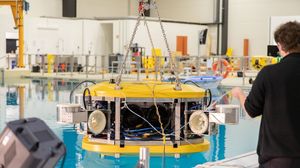
This competition brings together international teams from research and application, offering them the opportunity to present their developments in AI-based marine robotics to a broad audience. The focus is on live demonstrations with underwater robots as well as innovative solutions involving autonomous underwater vehicles (AUVs), ROVs, maritime sensing, and autonomous systems.
The competition is primarily aimed at students, researchers, and developers in robotics, artificial intelligence, and related disciplines, and provides a platform for exchange between academia, industry, and the community.
More information: https://uw-competition-26.dfki-bremen.de/
Exhibition
The DFKI is represented at the accompanying conference exhibition at the Congress Centrum Bremen (Hall 4) with its own stand, as well as as a partner at the joint stand of the State of Bremen and the joint stand of the State of Lower Saxony and the University of Oldenburg.
DFKI Stand
DFKI is showcasing the Open6GHub+ project at its own booth in the accompanying exhibition. The demonstrator features a flexible, distributed AI system that processes data streams from sensors – typically cameras – in real time. Visitors can observe how video streams are analyzed simultaneously across multiple devices and how the computational load is dynamically distributed among various edge devices. The solution enables the efficient, robust, and flexible use of AI applications across diverse devices and under changing network conditions.
Location: Congress Centrum Bremen, Hall 4, Booth 20
Joint Stand State of Bremen
DFKI Bremen is showcasing its Robotics Innovation Center and Cyber-Physical Systems research departments at the "Bremen and Bremerhaven – Home of Innovation" joint stand, alongside other AI institutions from the state of Bremen.
Location: Congress Centrum Bremen, Hall 4, Stand 33
Joint Stand State of Lower Saxony/University of Oldenburg
At the "Northern AI Research Alliance" joint stand hosted by the State of Lower Saxony and the University of Oldenburg, DFKI is showcasing current research in the fields of cooperative and autonomous systems, marine perception, and interactive machine learning. The featured projects demonstrate how artificial intelligence transforms perception into knowledge and derives transparent decisions from it – for applications ranging from autonomous systems and medical decision support to sustainable environmental management. They exemplify trustworthy AI that combines scientific excellence with socially relevant applications.
Location: Congress Centrum Bremen, Hall 4, Stand 21
Further information on IJCAI-ECAI 2026 can be found on the official conference website: https://2026.ijcai.org/
Related News
Media