
UDE and DFKI expand joint research in AI and robotics: DFKI Project Office AURA Lab Duisburg-Essen launches
| Health & Medicine | Data Management & Analysis | Human-Machine Interaction | Robotics | Press release
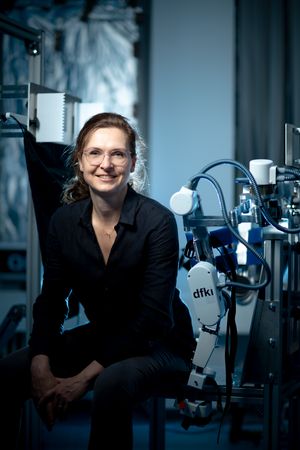
The University of Duisburg-Essen (UDE) and DFKI have been working closely together since 2021. Elsa Kirchner is an important link between the two institutions: The Professor heads the Medical Systems Engineering research group at the Faculty of Engineering at the University of Duisburg-Essen and the Intelligent Healthcare Systems team at DFKI’s Robotics Innovation Center in Bremen. Her work combines AI and robotics with intelligent biosignal analysis.
The new ‘DFKI AURA Lab Duisburg-Essen’ provides a permanent base for this collaboration in Duisburg and opens it up to further research groups. Professor Barbara Albert, Rector of the University of Duisburg-Essen, outlines the plans:
‘Research in artificial intelligence thrives on exchange across disciplines. With the “DFKI Project Office AURA Lab Duisburg-Essen”, we are creating a place at our university where new connections can develop between researchers, topics and ideas. Through this network, we want to further expand our research in AI and AI-driven robotics.’
Professor Antonio Krüger, CEO of DFKI, says:
‘The University of Duisburg-Essen has been an important research partner for DFKI for several years. Together, we are carrying out projects ranging from rehabilitation to space research. Establishing a permanent presence in Duisburg strengthens our research in assistive and human-centred robotics.’
 © UDE/Fabian Strauch
How much support does a person need to perform a movement? Elsa Andrea Kirchner has been researching exoskeletons that adapt their level of assistance to the individual for many years. In rehabilitation, for example, they can help people relearn movements after a stroke.
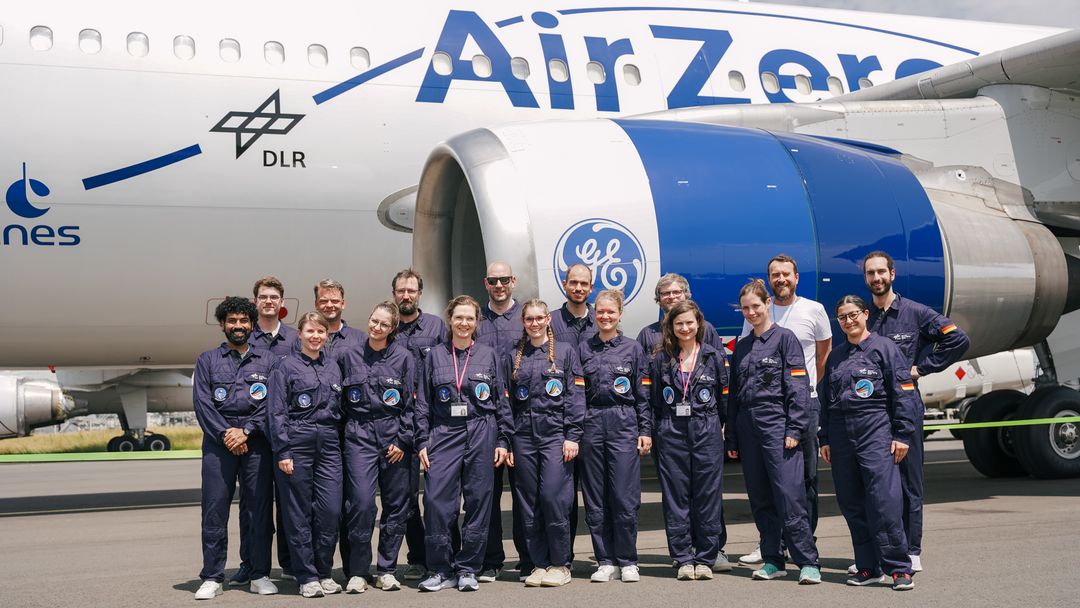
The team is now also using this technology to prepare astronauts for movement in weightlessness. In the MikroBeM project, UDE and DFKI are investigating whether fine motor movements can be trained on Earth using an exoskeleton. The system learns to compensate for the weight of the arm on an individual basis, thereby simulating microgravity. The real test comes during parabolic flights: under actual weightlessness, the researchers investigate whether participants benefit from this training. In September 2026, the team had already completed its fourth campaign in microgravity.
Prof. Dr. Elsa Andrea Kirchner says:
‘What excites me is that human-centred AI and robotics, combined with intelligent biosensing, allow us to tackle very different questions: How can an exoskeleton help someone after a stroke – and how can the same technology prepare astronauts for weightlessness? The “DFKI Project Office AURA Lab Duisburg-Essen” gives us the space to develop ideas like these together.’
The ExoAssist project explores another application. Since July, UDE and DFKI have been developing a full-body exoskeleton that could one day allow astronauts to control remote robots through their own movements – for example, when carrying out tasks in Earth orbit or on the Moon.
Contact:
Prof. Dr. Elsa Andrea Kirchner
- Elsa.Kirchner@dfki.de
- Phone: +49 421 17845 4113