Energy and Infrastructures (CCEI)
Competence Center at the German Research Center for Artificial Intelligence (DFKI)
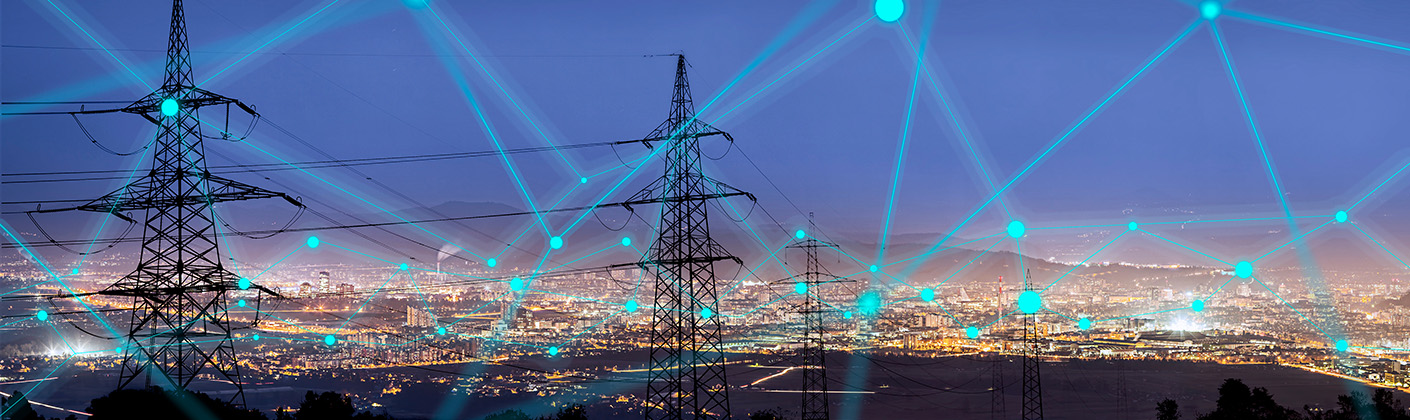
The Competence Center Energy and Infrastructures (CCEI) researches how artificial intelligence can be used to plan and intelligently control the safe, efficient operation of future-proof infrastructures. Driven by the energy transition, the progressing electrification of all areas of life, and the digitalization of energy, supply, and disposal networks, residential buildings, as well as industrial buildings and production facilities, many areas that were previously completely separate are increasingly converging into networked, intelligent infrastructures: energy grids, decentralized energy facilities, buildings, production systems, urban metering and utility infrastructure, etc. These systems will no longer be isolated in the future but will become part of closely networked smart cities. Smart infrastructures are thus becoming essential links among the technical, economic, and social processes that society, the economy, and public services depend on daily.
Open Data Spaces as the Foundation of Intelligent Energy and Infrastructure Systems
Data space technologies enable structured descriptions of data from a wide variety of sources within federated, semantic data spaces, making it discoverable and interoperable. Much of this information comes from connected devices, sensors, systems, and machines – the Internet of Things (IoT) – but also from traditional database systems, data portals, and documents. These data spaces provide cross-domain data and the knowledge derived from it in a data-sovereign way, forming a solid basis for the secure use of AI methods. At the CCEI, data spaces form the basis for transforming previously separate supply and infrastructure systems into dynamic, networked systems and for gaining a deep understanding of complex interactions.
AI Methodology for Complex Energy and Infrastructure Landscapes
Analyzing large and heterogeneous datasets in the energy and infrastructure sector is nearly impossible without artificial intelligence methods. The CCEI therefore uses and develops advanced AI techniques for modeling, analyzing, and optimizing complex systems. Its focus topics span all areas of AI and include data fusion, neural models for forecasting and pattern recognition, foundation models, classical and LLM-based agentic AI, as well as AI-on-edge. Alongside researching the most suitable AI methods, and given that these infrastructures are often critical, we place particular emphasis on the explainability and assurance of AI-driven decisions, recommendations, and results. The application goal is AI-based decision support for critical operating conditions as well as adaptive control strategies for networked infrastructures.
Visualization and Interaction
Beyond data analysis, the clear presentation of complex relationships in infrastructure and energy systems is becoming increasingly important. XR technologies (industrial XR) allow vivid visualization of large datasets, models, and simulations that users can interact with effectively. This enables planning, operations, and decision-making processes to be optimally supported in areas such as intelligent energy grids, smart cities, buildings, or federated production systems.

"We eliminate systemic silos by intelligently connecting previously separate infrastructures. Using digital twins, federated data spaces, modern AI methods, and industrial XR, we are shaping the resilient, sustainable infrastructures of tomorrow. Our goal is to make the potential of AI industrially usable for the secure control of complex energy, building, and supply networks."
A strong foundation for research
The CCEI’s interdisciplinary strength stems from its natural growth: Building on the successful collaboration between the “Connected Intelligent Systems” (CIS) and “Smart Energy Systems” (SES) research groups in smart living, the SmartCity Living Lab (SCLL) and the research groups Future Applied Industrial AI (FAI2) and Interconnected Factory Architectures (IFA) now also collaborate. This strong foundation enables us to address the complex interactions among modern energy and infrastructure systems from multiple disciplinary perspectives in a comprehensive way.