
The focus was on how artificial intelligence, sensor technology, virtual reality, and interactive assistance systems can support and transform sports. The research presentations showcased a wide range of approaches: For example, three experienced runners spent four months testing ChatGPT as a training coach. Another project, “ClimbGen,” introduced an algorithm for generating personalized climbing routes. During the demo session, participants were able to try out various prototypes, including a vibration belt that makes changes in balance perceptible through haptic feedback.
A notable success for the DFKI: A research team led by Daniel Sonntag won the Best Demo Award for their “Heads Up!” demonstration. The project explores how augmented reality can assist skiers off-piste by, for example, displaying hazardous areas and safe routes directly in the skier’s field of view view.
Further insights were provided by keynote speeches from Dr. Pascal Bauer (Saarland University), assistant professor of sports analytics and data scientist for the German national soccer team, as well as Prof. Dr. Tamara Clegg (University of Maryland), whose research focuses, among other things, on how athletes reflect on their performance data.
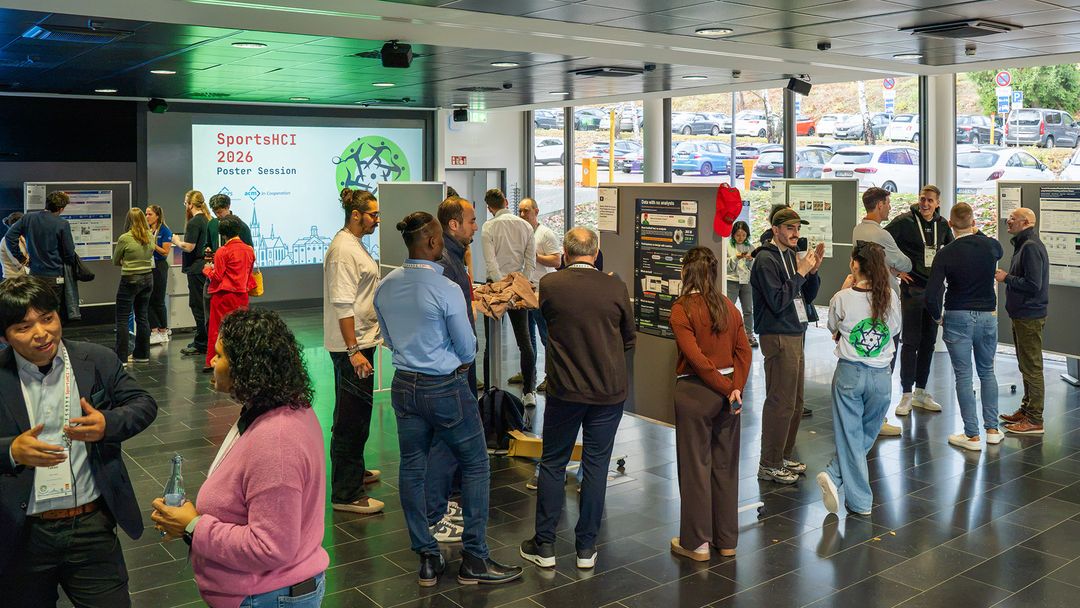
The DFKI also participated as a host: On Tuesday, November 17, the poster session took place at the DFKI’s premises and provided an opportunity to present and discuss current research projects.