
AI for collision avoidance in orbit
The growing number of active satellites and the large amount of space debris mean that collisions in near-Earth orbit are becoming significantly more likely. Therefore, ensuring the safety of space infrastructure increasingly depends on the early detection and avoidance of collisions. Mega-constellations consisting of hundreds or thousands of small satellites pose new challenges for operators and control centres. A collision in space can render entire orbital areas unsafe for years to come.
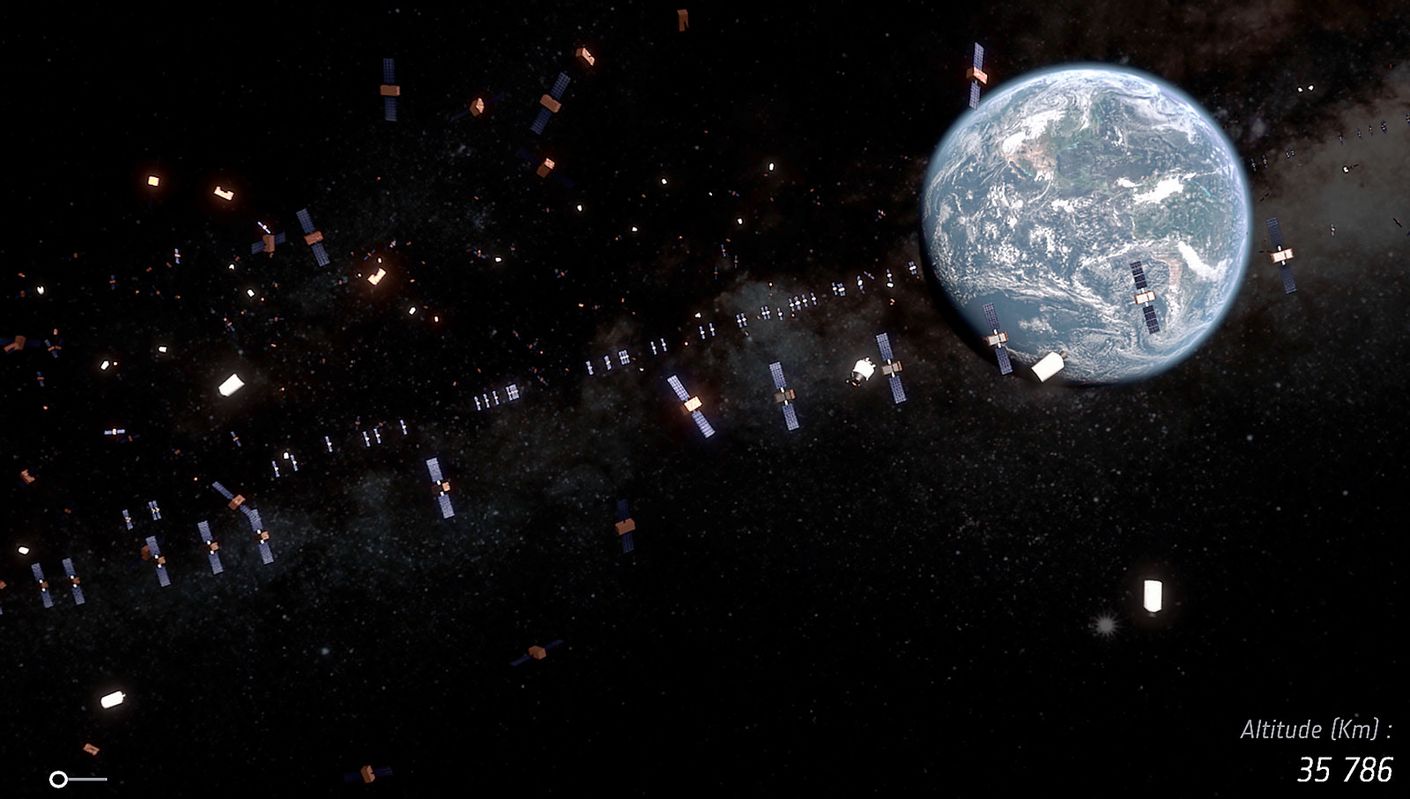 © ESA
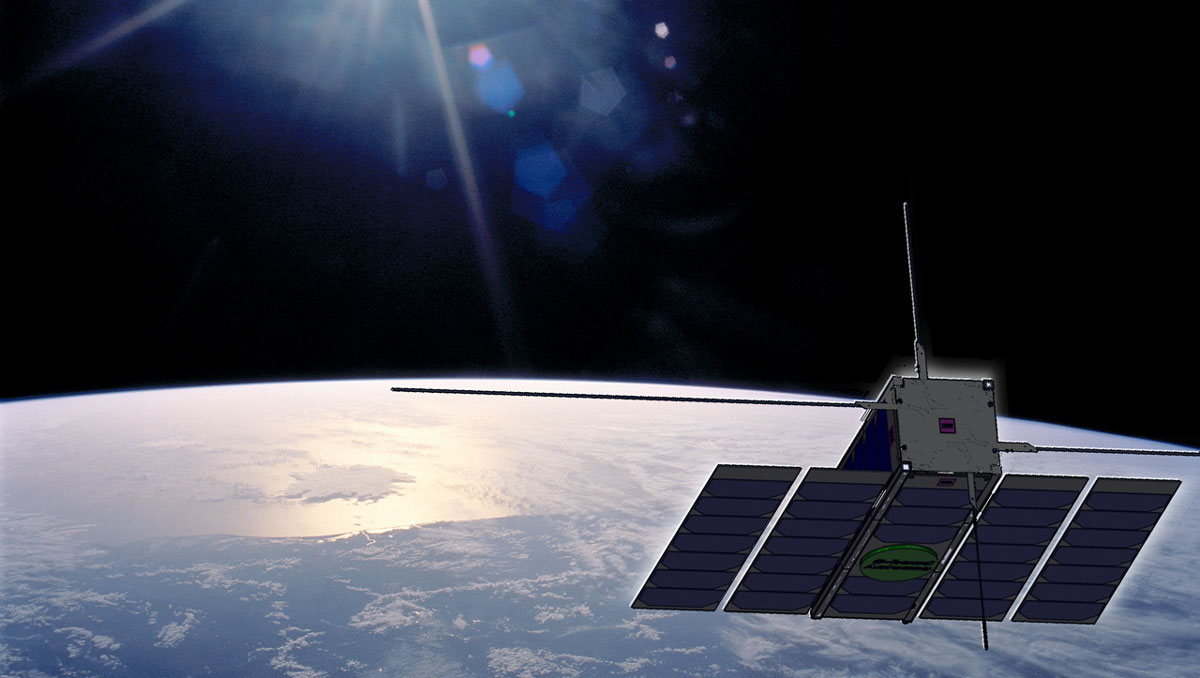
© ESAAI systems can help prevent such scenarios by accurately assessing risks and proposing countermeasures in good time. The Smart Data & Knowledge Services research department in Kaiserslautern has therefore been working intensively on AI-supported analysis of the orbits of active and passive satellites, as well as known debris. These methods use telemetry, radar and optical data to detect deviations from expected orbits and provide early warnings of potential collisions. This allows experts to monitor critical situations more effectively and plan evasive manoeuvres before chain reactions occur.
To meet the stringent safety requirements and limited hardware resources available on board satellites, researchers rely on hybrid AI approaches. These approaches combine classic, physics-based models with data-driven methods to develop robust evasive strategies that adapt dynamically to conditions in orbit. This is an important step towards ensuring the future safety of orbital space infrastructure.
Further articles on space explorations
DFKI4Space

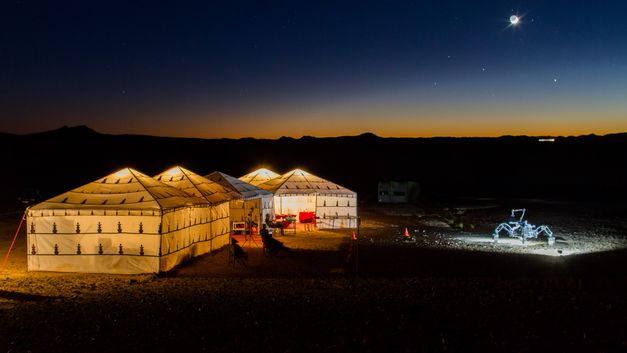
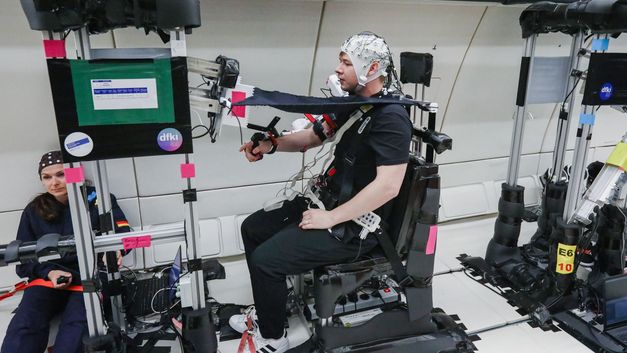
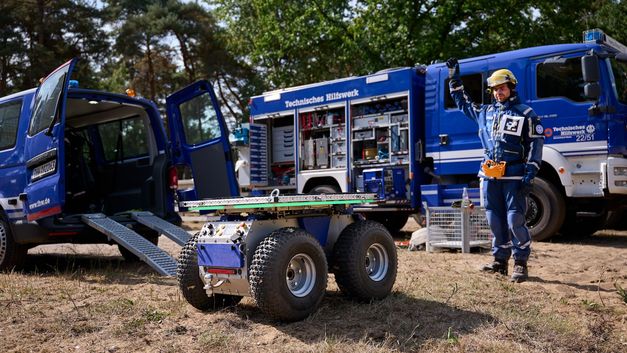
Unique research and testing infrastructure for space robots
 © DFKI, Annemarie Popp
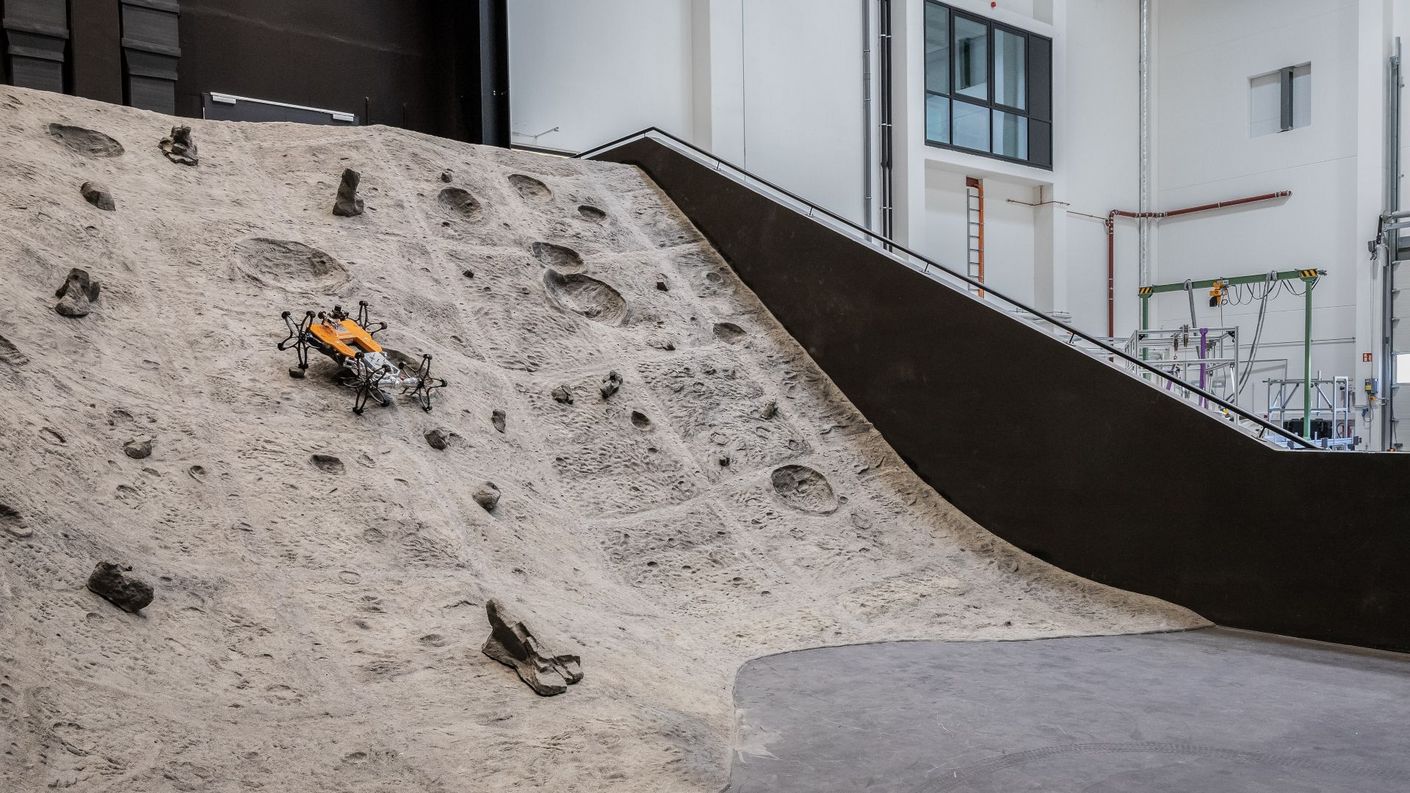
The Robotics Innovation Center in Bremen features a highly specialized research and testing infrastructure that enables the practical development and evaluation of robotic systems under realistic conditions. Systems, modules, and control units are tested iteratively to systematically increase their technology readiness and gradually adapt them to the requirements of planetary and orbital missions.
Test facilities:
- Crater landscape: Simulates Moon and Mars conditions, including slopes of up to 45°.
- Maritime Exploration Hall: Underwater and microgravity experiments with motion tracking.
- Virtual Reality Lab: Immersive environment for simulation, mission control, and teleoperation.
- ISO-compliant cleanroom: Hardware and electronics integration and quality control.
Field tests worldwide:
Testing under space-analog conditions on Earth, e.g., deserts, lava caves, or ice-covered waters.
ESA_Lab@DFKI – AI for space
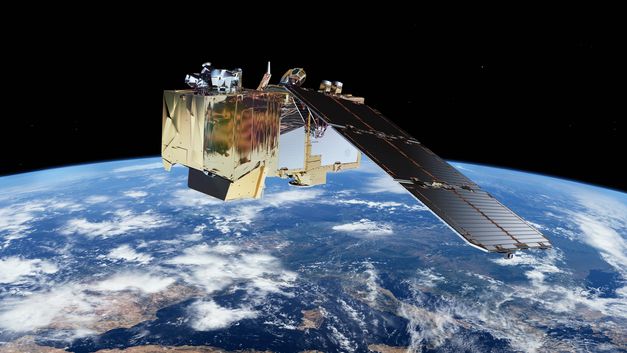
 © ESA
© ESATo develop new AI technologies and applications for civil spaceflight, the European Space Agency (ESA) and the DFKI established the ESA_Lab@DFKI.
At the transfer lab in Kaiserslautern, researchers from both institutions work together on:
- AI systems for analyzing complex Earth observation data
- Solutions for satellite collision avoidance
This collaboration fosters a close exchange between research and practical space operations.