
AI for Earth observation
Every day, satellites deliver vast quantities of data about our planet, ranging from information on vegetation and water levels to details on climate change. It is almost impossible for humans alone to keep track of these vast quantities of data. The research department Smart Data & Knowledge Services focuses on developing AI-supported methods that can efficiently evaluate raw data and convert it into actionable knowledge. Machine learning methods enable patterns to be recognised, anomalies to be identified, and developments to be accurately predicted – providing a valuable basis for decision-making in science, politics, and business.
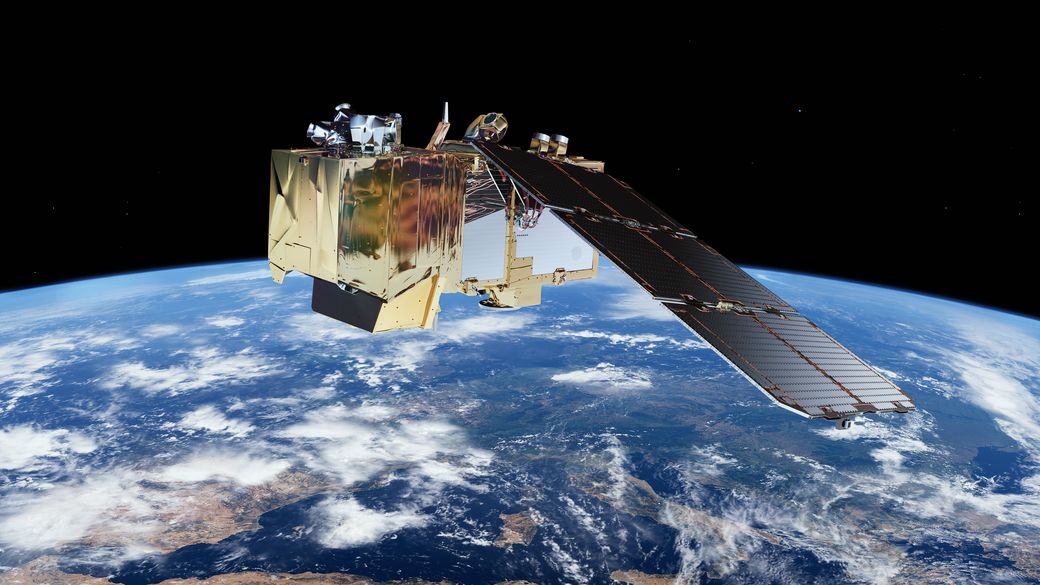
Agriculture provides a particularly tangible example of this: researchers have developed an AI system that optimises the planning of agricultural activities, minimises risks, and makes more efficient use of resources. Using satellite data and machine learning, environmental conditions can be analysed in real time, including weather, soil conditions, and the state of vegetation. This allows farmers to make more precise decisions regarding everything from the optimal time for sowing to harvesting.
Another area of research involves developing digital twins of the Earth. These virtual models integrate various data sources, primarily satellite data, to provide comprehensive, up-to-date information on climate, vegetation, water levels, and urbanisation. Based on this information, climate, environmental, and urbanisation scenarios can be simulated, and predictive analyses can be carried out.

"Data alone is worthless; only through intelligent analysis does it become knowledge. AI methods can be used to identify natural hazards early, utilise resources more efficiently, and simulate future developments. Digital twins of the Earth help us understand climate and environmental processes, enabling the development of well-founded action plans."
Further articles on space explorations
DFKI4Space

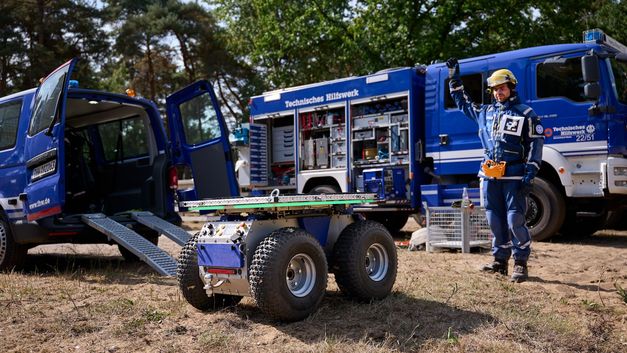
Unique research and testing infrastructure for space robots
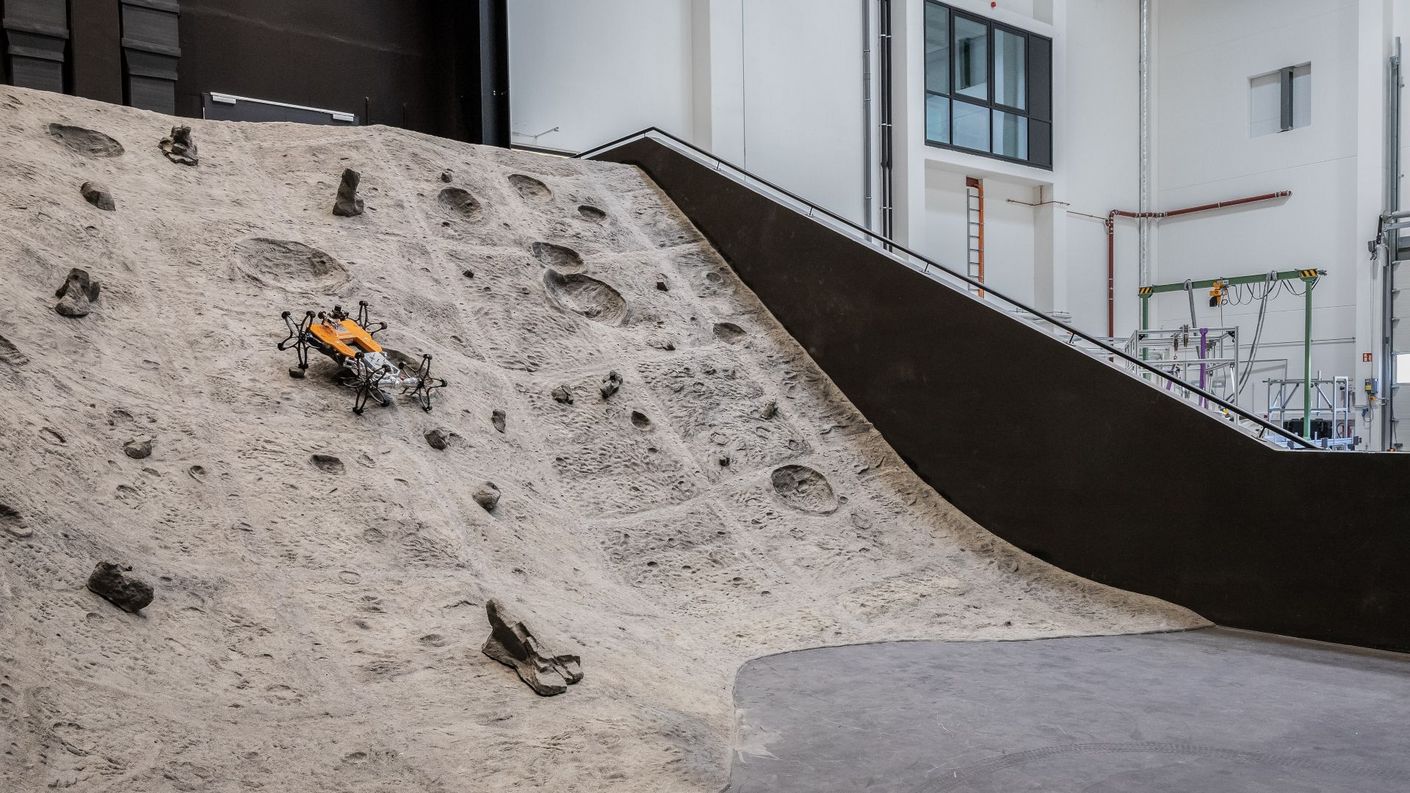 © DFKI, Annemarie Popp
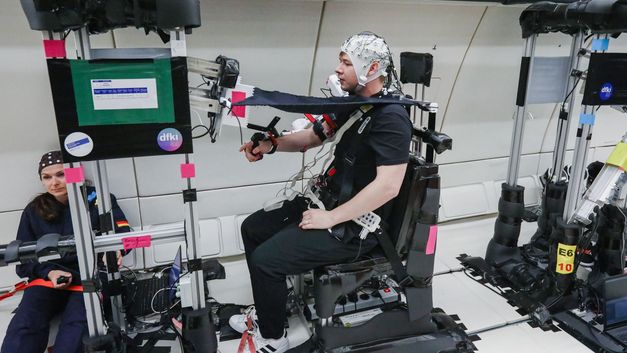
The Robotics Innovation Center in Bremen features a highly specialized research and testing infrastructure that enables the practical development and evaluation of robotic systems under realistic conditions. Systems, modules, and control units are tested iteratively to systematically increase their technology readiness and gradually adapt them to the requirements of planetary and orbital missions.
Test facilities:
- Crater landscape: Simulates Moon and Mars conditions, including slopes of up to 45°.
- Maritime Exploration Hall: Underwater and microgravity experiments with motion tracking.
- Virtual Reality Lab: Immersive environment for simulation, mission control, and teleoperation.
- ISO-compliant cleanroom: Hardware and electronics integration and quality control.
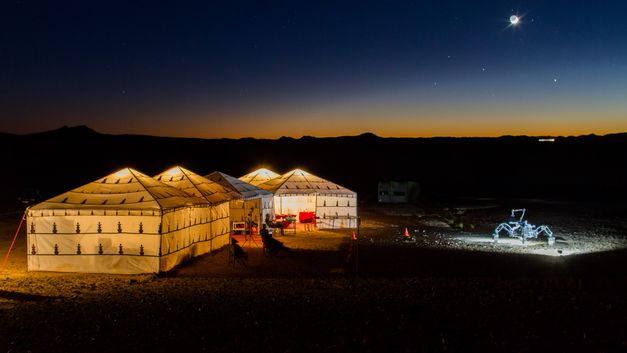
Field tests worldwide:
Testing under space-analog conditions on Earth, e.g., deserts, lava caves, or ice-covered waters.
ESA_Lab@DFKI – AI for space
 © ESA
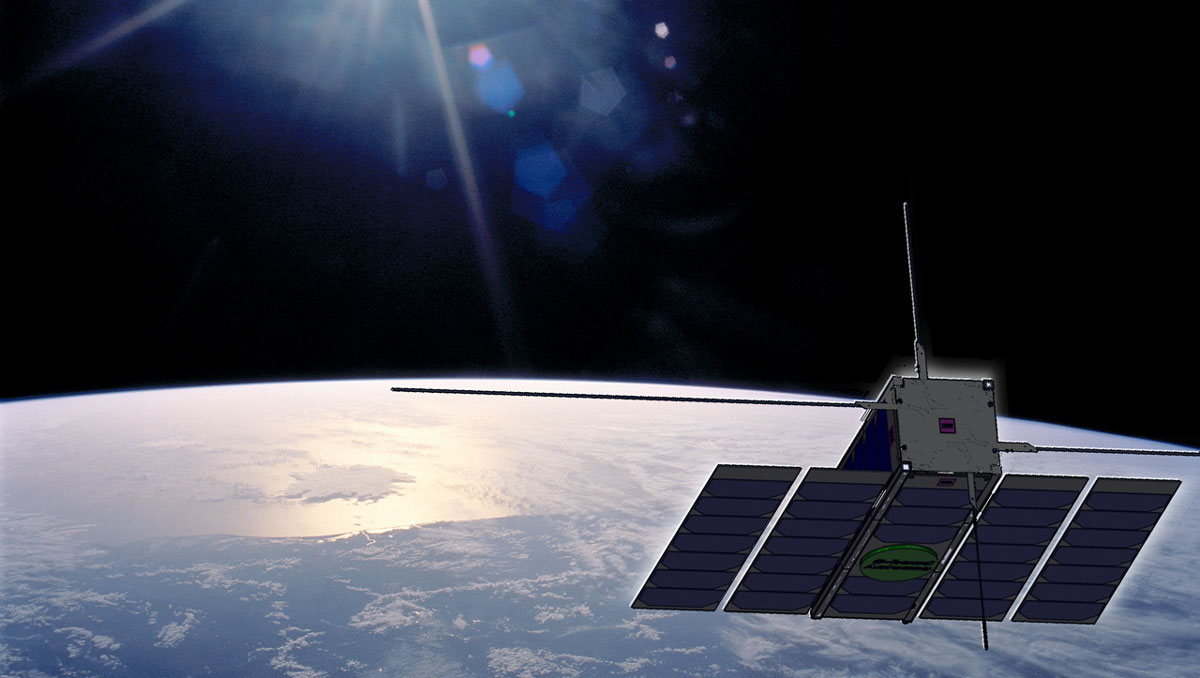
© ESATo develop new AI technologies and applications for civil spaceflight, the European Space Agency (ESA) and the DFKI established the ESA_Lab@DFKI.
At the transfer lab in Kaiserslautern, researchers from both institutions work together on:
- AI systems for analyzing complex Earth observation data
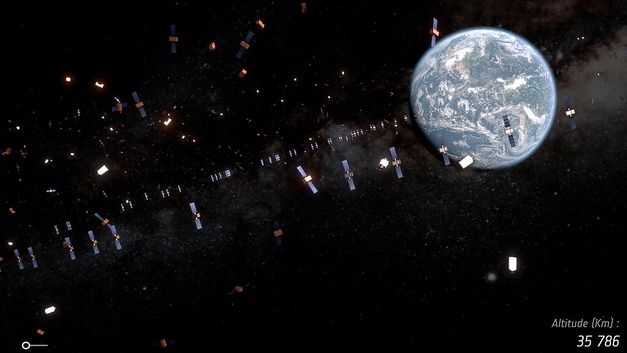
- Solutions for satellite collision avoidance
This collaboration fosters a close exchange between research and practical space operations.