
Future concepts for autonomous, AI-supported space missions
While the use of AI in space offers new possibilities for autonomous, efficient, and sustainable systems, it also poses significant challenges. Many existing systems are based on rigid processes and are not yet designed to integrate adaptive or autonomously acting components. Technical hurdles such as limited computing power, communication delays, and extreme environmental conditions must be overcome, as must issues of security and trust.
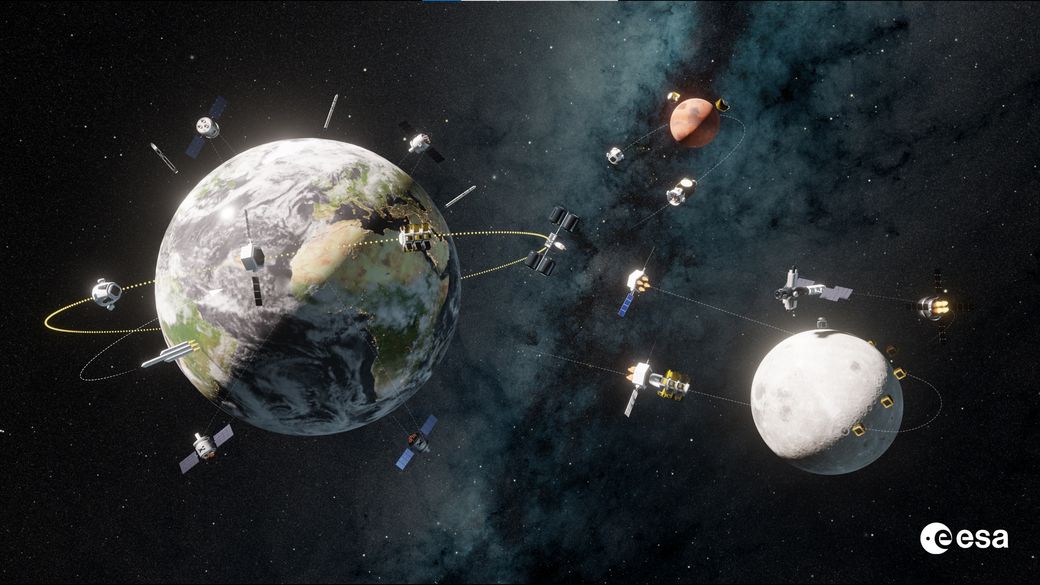
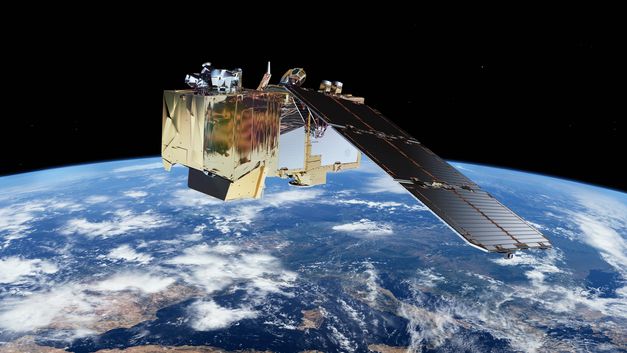
The Cyber-Physical Systems research department in Bremen is therefore investigating new concepts for autonomous, AI-supported space missions. The aim is to initiate a technological transformation that will permanently change space travel through innovative approaches. The work focuses on two central topics: firstly, the autonomous coordination of spacecraft — including energy, fuel, and resource management, safety-critical decision-making processes, and collision avoidance in orbital trajectories; and secondly, the support of crewed missions, where communication delays between spacecraft and ground stations over long periods of time — as experienced on long-term missions to Mars — require a fundamental shift towards greater autonomy for both spacecraft and crews.
Research is being conducted into concepts for shared intelligence, adaptive decision-making, and modular collaboration in both areas. These systems share knowledge, adapt decisions flexibly in response to new information, and work together in a coordinated manner within modular structures. This enables individual components to act independently while interacting effectively within the overall system. Self-diagnostic and self-healing systems, hybrid and explainable AI approaches, knowledge-based decision-support systems, and companion systems for astronauts all play a central role in this, as do secure and reconfigurable software architectures. The aim is to enhance resilience, safety, flexibility, autonomy, and resource efficiency equally.
Through this work, the researchers contribute to advancing the core foundations for applying AI in space and developing autonomous, trustworthy, and sustainable space systems.
Further articles on space explorations
DFKI4Space
Unique research and testing infrastructure for space robots
 © DFKI, Annemarie Popp
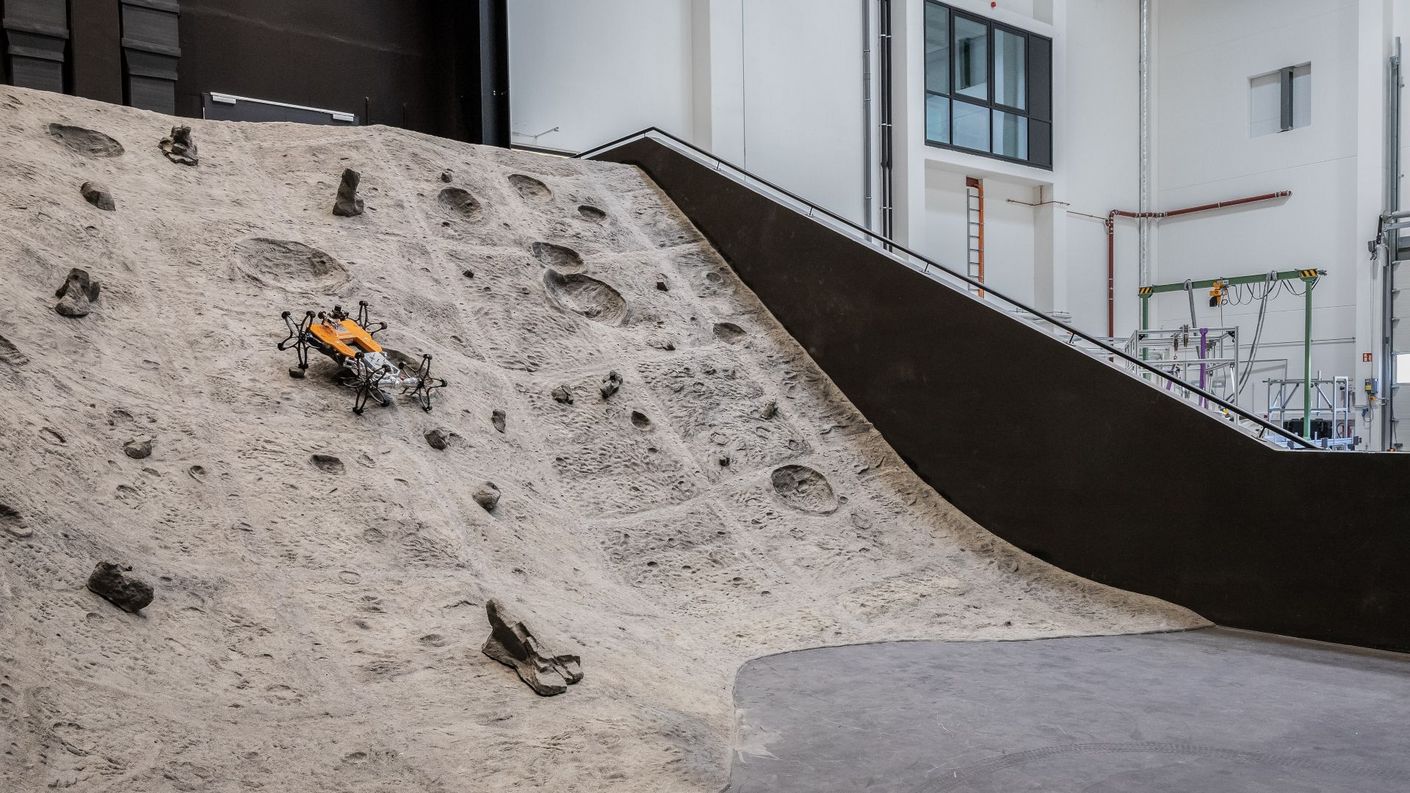
The Robotics Innovation Center in Bremen features a highly specialized research and testing infrastructure that enables the practical development and evaluation of robotic systems under realistic conditions. Systems, modules, and control units are tested iteratively to systematically increase their technology readiness and gradually adapt them to the requirements of planetary and orbital missions.
Test facilities:
- Crater landscape: Simulates Moon and Mars conditions, including slopes of up to 45°.
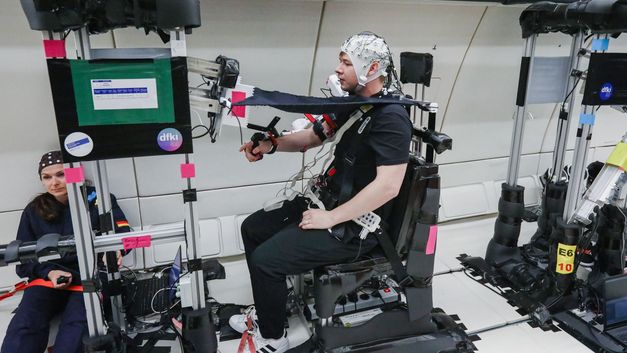
- Maritime Exploration Hall: Underwater and microgravity experiments with motion tracking.
- Virtual Reality Lab: Immersive environment for simulation, mission control, and teleoperation.
- ISO-compliant cleanroom: Hardware and electronics integration and quality control.
Field tests worldwide:
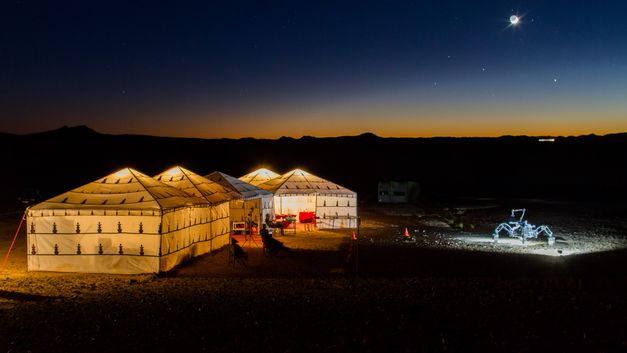
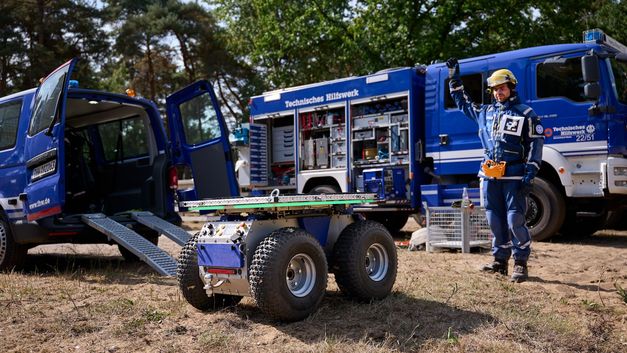
Testing under space-analog conditions on Earth, e.g., deserts, lava caves, or ice-covered waters.
ESA_Lab@DFKI – AI for space
 © ESA
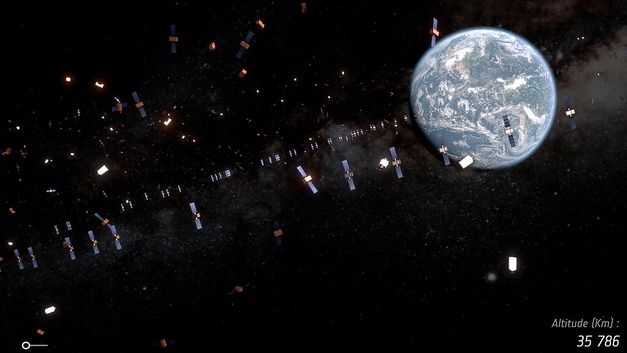
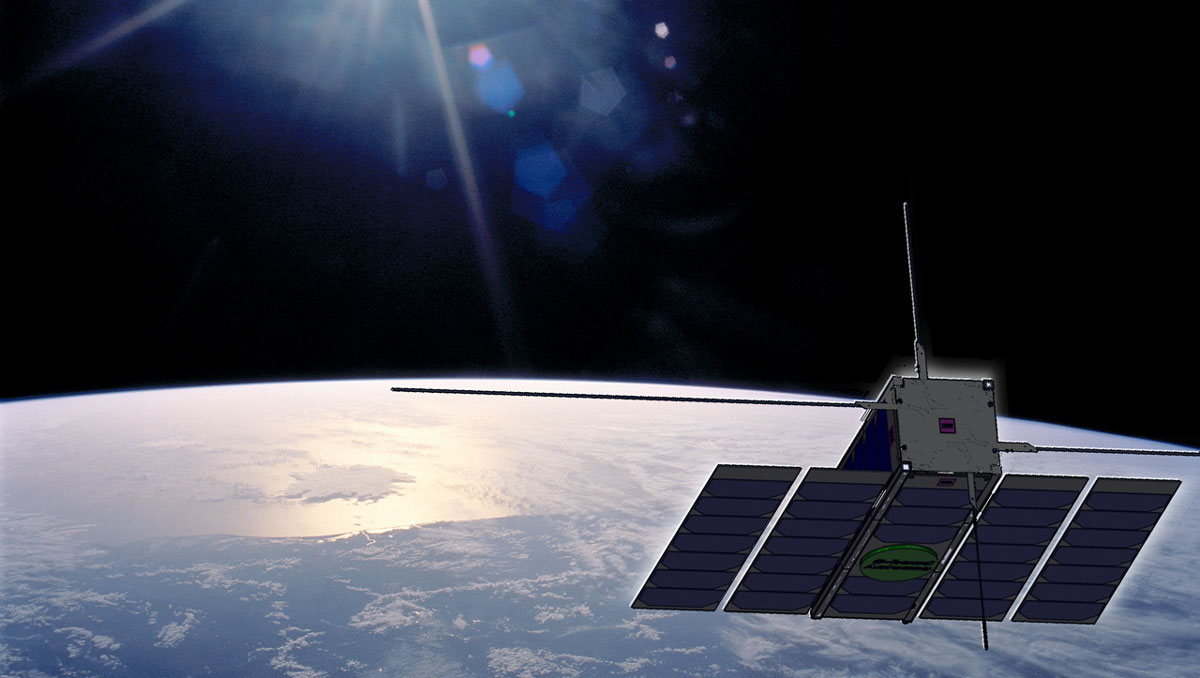
© ESATo develop new AI technologies and applications for civil spaceflight, the European Space Agency (ESA) and the DFKI established the ESA_Lab@DFKI.
At the transfer lab in Kaiserslautern, researchers from both institutions work together on:
- AI systems for analyzing complex Earth observation data
- Solutions for satellite collision avoidance
This collaboration fosters a close exchange between research and practical space operations.