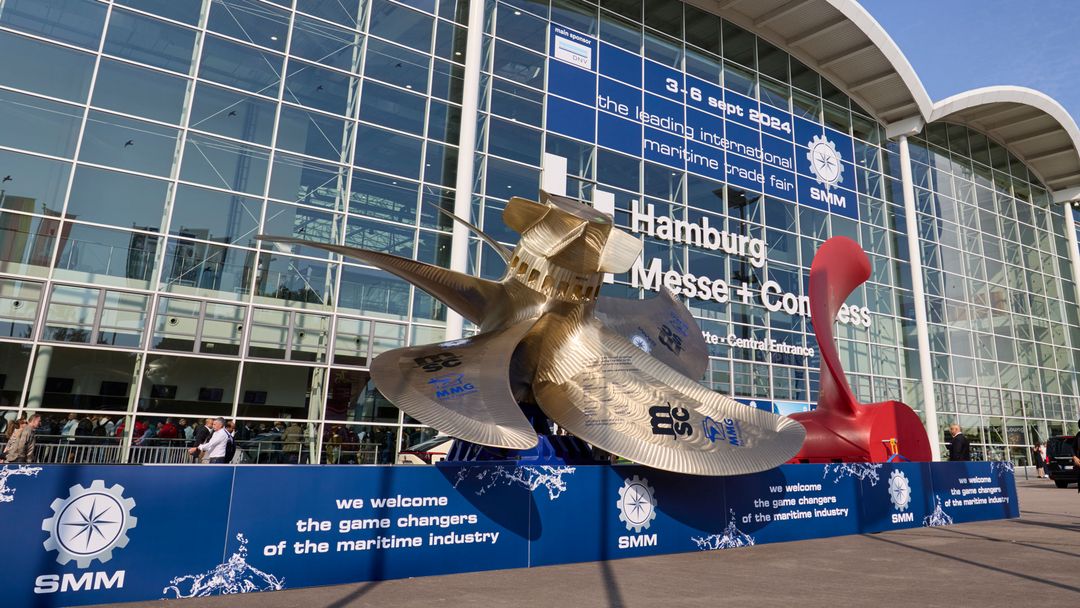
When the international maritime industry gathers in Hamburg at the beginning of September, key questions about the future of shipping will take centre stage: How can emissions be reduced, existing resources used more efficiently, and digital technologies meaningfully integrated into ship operations? More than 2,200 exhibitors and around 45,000 visitors from over 100 countries are expected at SMM 2026.
With Eco-Crossing, Jade University of Applied Sciences and the German Research Center for Artificial Intelligence (DFKI) are presenting an approach that applies artificial intelligence directly to one of these challenges. The assistance system under development is designed to help ferries make use of existing environmental conditions to operate more energy-efficiently. As an associated partner, FBS – Fähren Bremen-Stedingen GmbH enables the system to be tested and further developed in real-world ferry operations.
At SMM, this research approach will be brought to life in a multi-part exhibit: sensor technology, current analysis and AI-based route optimization demonstrate step by step how environmental perception can be translated into an energy-optimized route recommendation.
From Current Fields to Energy-Efficient Routes
Currents, wind and tides have a significant impact on a ship’s energy consumption. In international merchant shipping, environmental conditions are already taken into account in weather routing. For ferries operating short, regularly recurring routes, however, a comparable approach is not yet available.
Eco-Crossing transfers this principle to ferry operations. The system combines three central components: a navigation system, an environmental sensor system and an AI system.
The navigation system brings together data from the ship’s navigation and sensor systems. Among other things, it captures and processes routes, acceleration, currents and wind as well as the corresponding energy consumption. The data are processed, validated and made available to the AI model.
The environmental sensor system plays a particularly important role. An infrared camera combined with GPS and inertial sensors is used to capture local current conditions at the water surface. The image data can be used to determine current vectors and velocity fields – information that subsequently feeds into the calculation of energy-efficient routes.
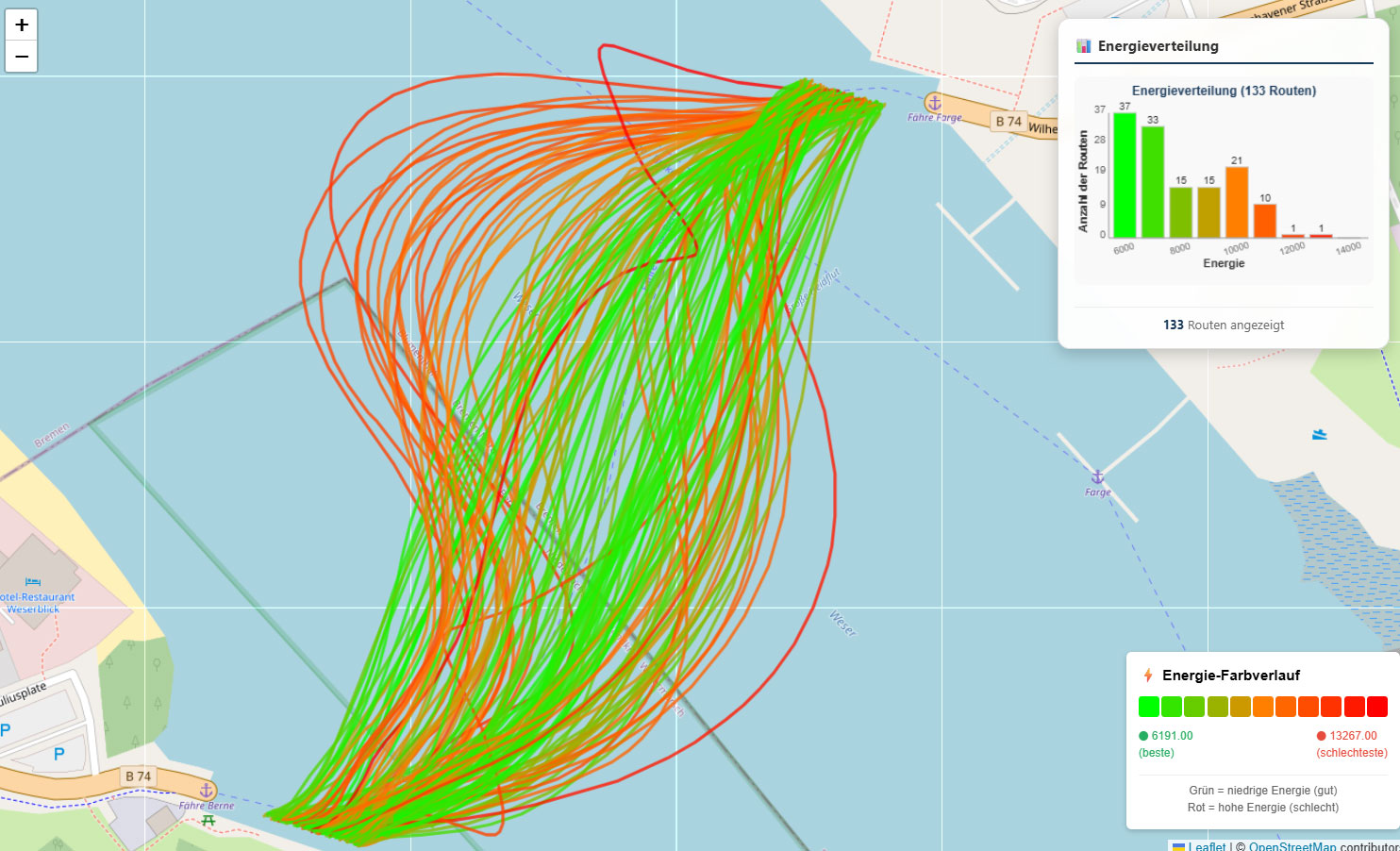
The AI system combines this information with historical environmental and consumption data as well as current conditions, such as restricted areas. On this basis, the AI system selects routes taking the current conditions into account and generates fuel-efficient route recommendations for the ship’s crew.
Research in Action: Eco-Crossing at SMM
Visitors to SMM will be able to see how the individual components interact at the exhibit. The exhibit will feature the sensor technology intended for use on board the ferry. A demo application then visualizes how information about currents is derived from images of the water surface: Alongside the thermal image, calculated current vectors, velocity fields and measurement data are displayed.
A second application brings this information into the actual route optimization process. The display compares ferry routes, wind and current measurements, and the associated energy consumption. This makes it possible to see how the assistance system determines an energy-optimized route.
The exhibit thus makes the entire processing chain visible – from sensor technology and the analysis of environmental conditions to the AI-based route recommendation – while demonstrating the practical benefits the technology can offer for ferry operations.
Assistance Rather Than Autonomy
Eco-Crossing is deliberately designed as an assistance system. The AI does not take control of the vessel. Instead, it condenses complex environmental, navigation and consumption data into an additional basis for decision-making.
The ship’s crew receives route recommendations adapted to the current conditions. Decisions regarding course and speed, as well as responsibility for the voyage, remain with the ship’s crew.
This interaction between humans and AI is particularly important in real-world vessel operations: The technology is not intended to replace existing expertise, but to make information available that would otherwise be difficult to incorporate into route decisions without sensor- and AI-based analysis.
Up to 20 Percent Less Fuel
The potential is considerable. Model calculations from the project indicate that optimized operation taking environmental conditions such as water currents and wind into account could reduce fuel consumption by around 20 percent. For a single ferry consuming 300,000 liters of diesel per year, this would correspond to a reduction in CO₂ emissions of approximately 159 metric tons per year.
Reducing fuel consumption also lowers energy use and operating costs. Eco-Crossing therefore addresses ecological and economic objectives at the same time.
The focus on the existing fleet is particularly relevant: The assistance system is being developed as a practical and economically viable retrofit solution. Improvements in efficiency would therefore not depend exclusively on the acquisition of new vessels or propulsion systems.
Real-World Testing on the Weser
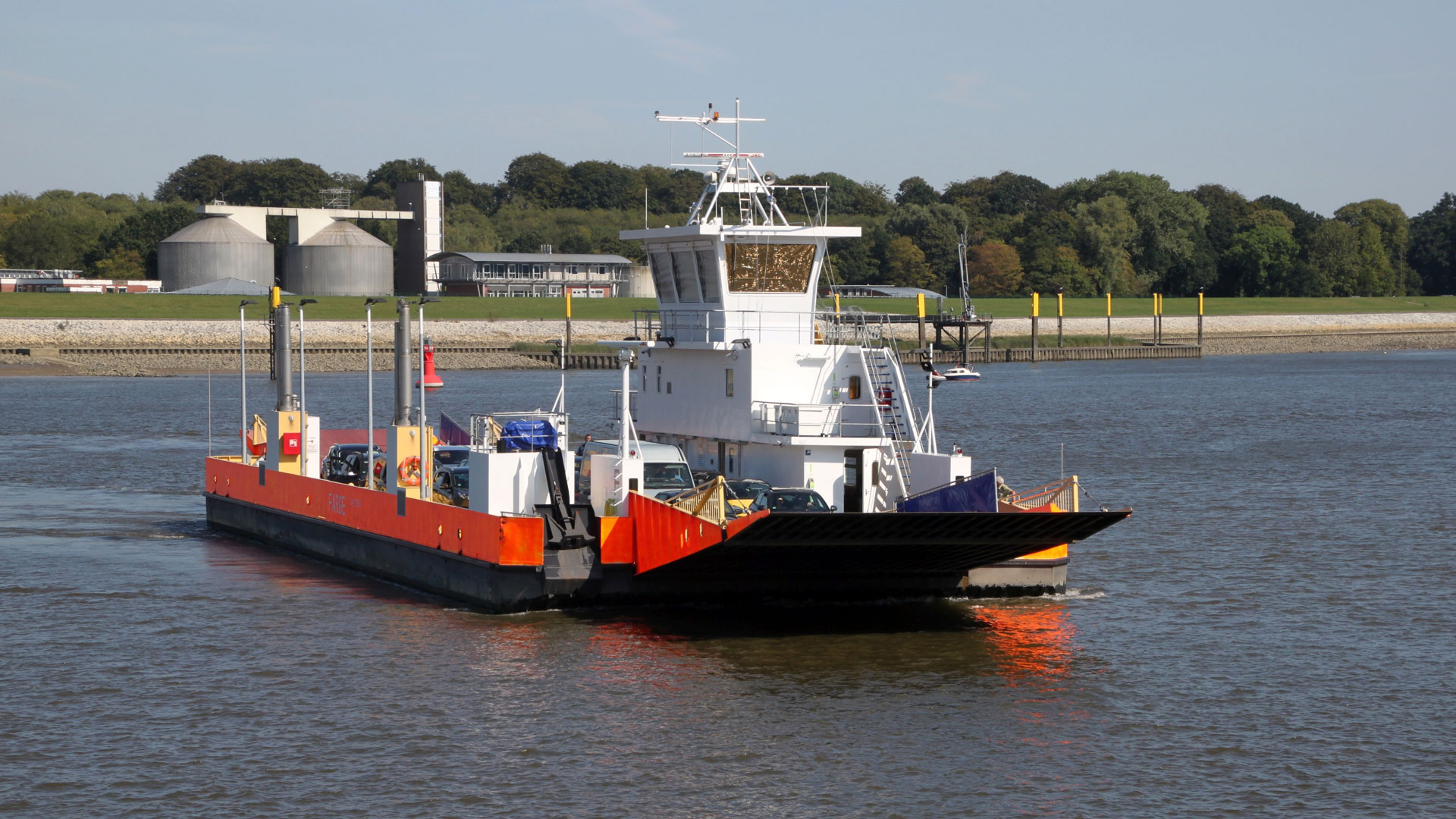
Whether the calculated potential can also be realized in day-to-day ferry operations is being investigated on the Weser. The system is being tested and validated under real-world conditions on board the “Farge” ferry.
Experience from ferry operations has been incorporated into the development process from the outset. This is intended to ensure that the assistance system is not only technically capable, but also meets the requirements of day-to-day operations. Looking ahead, the project extends beyond this individual ferry connection. Ferries form part of the transport infrastructure at several hundred locations across Germany. A retrofit assistance system that helps existing vessels operate more energy-efficiently could therefore also be deployed on other ferry routes.
Award-Winning and on Its Way into Practice
The potential of Eco-Crossing was already recognized in summer 2026, when the project was awarded third place in the Laeisz Prize. The award recognizes scientific work and projects that provide innovative impetus for the maritime industry.
Its presentation at SMM now marks the next step towards transfer into practice. The international leading trade fair brings together stakeholders from shipbuilding, the supply industry, digitalization, research and the maritime sector. For Eco-Crossing, it therefore provides an environment in which a concrete research demonstrator can spark discussions about further applications and the transfer of the technology into maritime practice.
Eco-Crossing at SMM 2026:
1–4 September 2026
Hamburg Messe und Congress
Hall A1 | Stand A1.543
Joint stand of the German Federal Environmental Foundation (DBU)
At the exhibit:
Environmental sensing | Current visualization | AI-based route optimization
Project partners: Jade University of Applied Sciences, German Research Center for Artificial Intelligence (DFKI)
Associated partner: FBS – Fähren Bremen-Stedingen GmbH
DFKI research department: Marine Perception
Funding: German Federal Environmental Foundation (DBU)
Learn more about Eco-Crossing and sign up for project updates:
Eco-Crossing at Green Shipping Niedersachsen
Examples of Maritime AI Research at DFKI
XAI4SFAS
Explainable AI supports semi-autonomous ship navigation by providing transparent and comprehensible recommendations for safe navigation.
AI-REEFSHIELD
AI and autonomous underwater robotics enable efficient monitoring of marine restoration areas and support the protection of ecosystems in the North Sea.
REST – SharePort
Secure digital solutions for sharing resources among port stakeholders aim to strengthen the resilience of maritime logistics chains.
DFKI conducts research on AI for maritime applications across a wide range of fields – from intelligent sensor technology and ship navigation to autonomous robotics, environmental monitoring and resilient port infrastructure.