Social and situationally aware: German-Danish research project develops humanoid robots for practical use
| Transfer Stories | Trade & Logistics | Industry 4.0 | Autonomous Systems | Human-Machine Interaction | Robotics | AI for Assistive Health Technologies | Lübeck | Press release
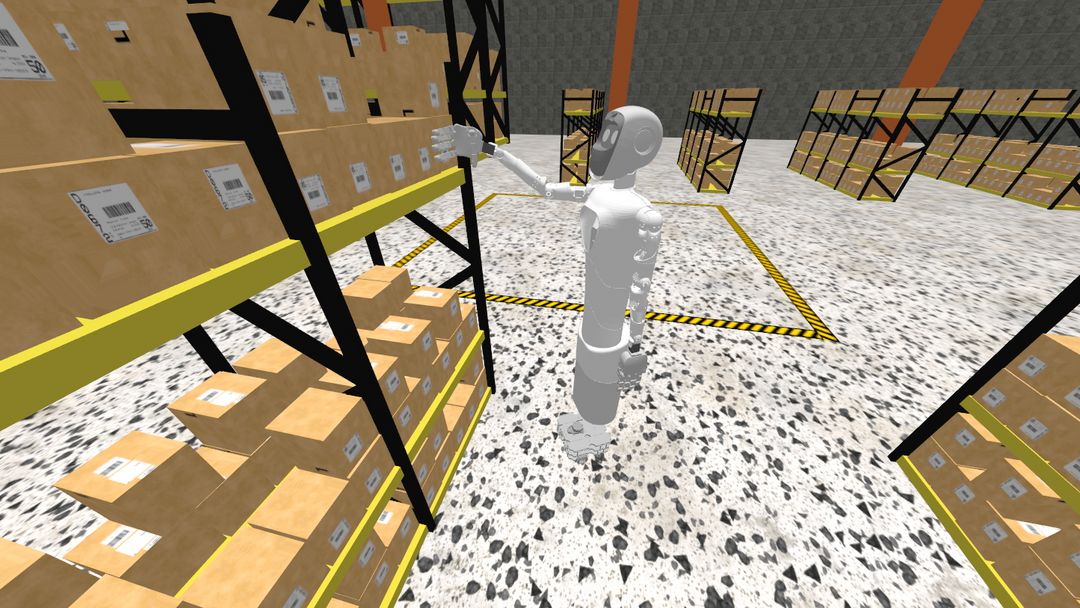
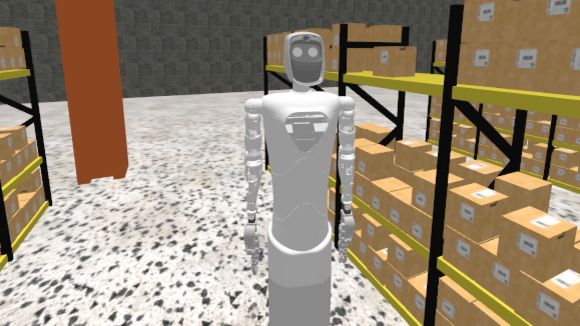
In RobOdin, universities, research institutions and industry partners from northern Germany and southern Denmark are working together on high-performance humanoid robots for industrial and social applications. The aim is to create robust and practical systems that take on dangerous, monotonous or physically demanding tasks, thereby making work processes safer and more efficient. A particular focus is on interactive and social skills for natural and context-appropriate human-machine interaction. The systems are designed to recognise people, understand language, communicate naturally and react flexibly to dynamic situations.
The project is led by the University of Southern Denmark. Other participants include the DFKI Laboratory in Lübeck, Flensburg University of Applied Sciences, the University of Lübeck and Christian-Albrechts-Universität zu Kiel. Industry and network partners include HARTING, Novo Nordisk, Diakonie Nord Nord Ost, the Schleswig-Flensburg Hazardous Materials Fire Brigade, navel robotics and the University of Twente.
DFKI Lübeck: AI-based decision-making framework for humanoid robots
The AI for Assistive Health Technologies research department at the DFKI Lübeck Laboratory is developing RobOdin, a customisable decision-making framework for humanoid robots. The system, which is based on large language models, integrates the outputs of various AI modules – Including object and emotion recognition – and consolidates them into a shared knowledge base. The model not only encompasses a general understanding of tasks for everyday robotic activities, but also takes into account the specific anatomy and interaction capabilities of the humanoid robot. Based on this, it processes the information and derives context-dependent action strategies for the robot. Standardised interfaces and data formats ensure consistent integration and seamless exchange between the components.
This enables the robot to adapt its behaviour flexibly to different tasks and operating environments, and to continuously refine its capabilities.
“For humanoid robots to collaborate meaningfully with humans in the future, they need a comprehensive understanding of their environment and the situation at hand,” says project leader Philipp Koch from the DFKI laboratory in Lübeck. “Our aim is to combine AI models, sensor data, and speech processing in such a way that flexible and transparent decisions can be made.”
Technological contributions from the partners
The other project partners are also contributing key technological building blocks to the overall system:
Christian-Albrechts-Universität zu Kiel is developing methods for visual perception and social navigation that enable robots to recognise and interpret gestures, objects and dynamic environments in real time.
Building on this, the University of Lübeck is researching cognitive abilities such as situational understanding, task prediction and explainable decision-making models for humanoid robots, enabling a context-dependent interpretation of the environment.
The DFKI Laboratory in Lübeck is developing an AI-based decision-making framework that consolidates sensor data and information from various AI modules into a shared knowledge base and derives situation-dependent action strategies from this.
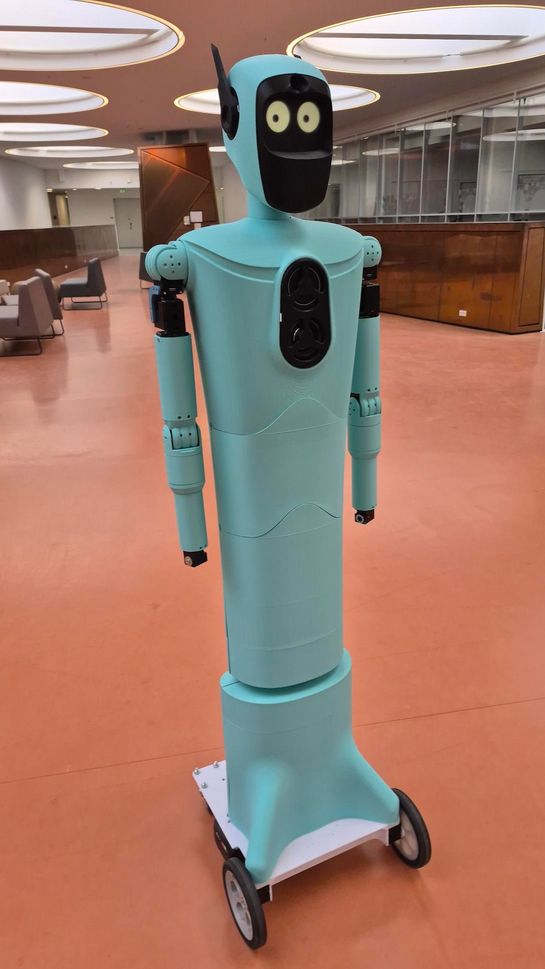
The University of Southern Denmark (SDU) is realising the humanoid robot platform. A key focus is on the sensor hands developed in collaboration with Harting, whose sensor technology – specifically designed for the fingers – is intended to enable fine motor tasks. In addition, SDU is integrating the AI and robotics components developed by the partners into a fully functional overall system.
Flensburg University of Applied Sciences is designing a simulation and training environment as a digital twin, which enables the testing and optimisation of the AI components before deployment on real hardware.
Tests in real-world scenarios
Another key focus of the project is testing the humanoid robot in realistic application scenarios from industry, medicine and emergency response, including assembly processes, pharmaceutical laboratory applications and safety-critical operations.
In collaboration with the Schleswig-Flensburg hazardous materials fire brigade, specific use cases such as the reconnaissance of hazardous situations, assistance with evacuations and the support of affected individuals are being investigated. HARTING is testing applications in assembly and manufacturing processes, whilst Novo Nordisk is providing a laboratory environment for pharmaceutical procedures. In collaboration with Diakonie Nord Nord Ost, social and assistive applications are also being researched.
Building a German–Danish robotics network
Furthermore, the project aims to establish a long-term network for robotics and AI research in southern Denmark and northern Germany. By pooling expertise from academia and industry, the project aims to create new synergies and sustainably strengthen regional innovation capacity.
RoBodin is funded by the European Union through the Germany–Denmark Interreg program (Interreg 6A) from 1 October 2025 to 30 September 2028 with a total budget of €2,369,227.52.
Further information:
Link to project website
DFKI project contact:
Natascha Koch, M.Sc.
German Research Center for Artificial Intelligence (DFKI)
AI for Assistive Health Technologies
Email: Natascha.Koch@dfki.de
Phone: +49 152 044 28821
DFKI press contact:
Andrea Fink
German Research Center for Artificial Intelligence (DFKI)
Communications & Media Bremen/Lübeck
Email: communications-hb@dfki.de
Phone: +49 421 178 45 4180
Project coordinator:
Oskar Palinko, Associate Professor
University of Southern Denmark
SDU Robotics
Email: ospa@mmmi.sdu.dk
Phone: +45 655 082 11

Press contact:
Communications & Media Lübeck